
Commercial Signage Cost Guide 2026: Pricing, Budget Factors, and Quote Planning
How much does commercial signage cost in 2026?
Commercial signage projects typically range from $200 for simple window graphics or vinyl decals to $200,000+ for large pylon signs, LED monument systems, or national rollout programs. Most exterior storefront sign projects, including channel letters and illuminated cabinet signs, fall in the $3,000 to $20,000 planning range. Monument signs typically range from $5,000 to $65,000+. Every commercial sign estimate depends on sign type, size, materials, illumination, installation conditions, permitting requirements, and full project scope.
At BlinkSigns, commercial signage budgets are built around the full project scope: site survey, design, permitting, fabrication, installation, and ongoing maintenance, not just the sign face.
Commercial signage is not priced like an off-the-shelf product because every sign is shaped by the property, visibility goal, brand standard, mounting surface, electrical conditions, local sign code, landlord criteria, and installation environment. A window decal, channel letter sign, monument sign, pylon sign, vehicle wrap, and national signage rollout all fall under the commercial signage category, but each has a different cost structure.
For buyers, the better question is not only, “How much does a commercial sign cost?” The better question is, “What does the full signage project require?” Once the scope is clear, a business can compare quotes more accurately, avoid missed line items, and choose a signage partner based on completeness rather than the lowest number on paper.
This guide explains typical planning ranges for major commercial sign types, what changes the estimate, what should be included in a professional quote, and how to prepare before requesting a project-specific estimate.
What Affects Commercial Signage Cost?
Commercial signage cost is shaped by sign type, size, materials, illumination, installation conditions, permitting requirements, electrical access, and quantity. A small non-illuminated interior sign may involve basic fabrication and installation. In contrast, a large illuminated exterior sign may require a site survey, permit review, electrical coordination, lift equipment, landlord approval, and long-term service planning.
The table below shows the main commercial signage cost drivers and the buyer risks they can create when they are not clarified in the quote.
| Cost Driver | What It Changes | Buyer Risk |
| Size | Materials, fabrication time, visibility, installation | Underestimating scale |
| Illumination | LEDs, wiring, power, permits | Missing electrical scope |
| Materials | Durability, appearance, maintenance | Choosing only by upfront price |
| Installation height | Lift, crane, labor, access | Equipment not included in the quote |
| Permitting | Timeline, revisions, municipal review | Quote delays and scope changes |
| Electrical access | Wiring, panels, licensed work | Scope change after approval |
| Quantity | Per-unit cost, rollout pricing, coordination | Poor program planning |
- Size affects cost because larger signs require more material, more fabrication time, stronger mounting, and more planning for installation. Visibility also matters because a sign viewed from a sidewalk does not need the same scale or contrast as a sign meant to be seen from a road, parking lot, or highway.
- Illumination affects the estimate because lighted signs may require LED modules, drivers, wiring, service access, electrical review, and power coordination. Front-lit channel letters, halo-lit letters, illuminated cabinets, digital displays, and LED message centers each have different electrical and maintenance requirements.
- Material selection affects both upfront budget and long-term performance. Aluminum, acrylic, polycarbonate, PVC, HDU foam, brick, steel, vinyl, and LED components all behave differently in exterior conditions. A lower upfront material choice may not create the best long-term value if fading, face replacement, repair access, or maintenance become recurring issues.
- Installation height and access can change the estimate because some signs require ladders, lifts, bucket trucks, cranes, scaffolding, traffic control, or after-hours installation. A ground-level window graphic is a different project from a sign mounted high above a storefront or installed on a freestanding structure.
- Permitting and code review may affect both cost and timeline. Many permanent exterior signs require local sign permit review, and illuminated signs may require electrical review. Requirements vary by municipality, property type, zoning district, landlord criteria, and authority having jurisdiction.
- Electrical access for illuminated signs should be clarified early. If power is already available near the sign location, the project may be more straightforward. If new wiring, trenching, panel coordination, or licensed electrical work is required, the project estimate can change.
- Quantity affects cost when signage is rolled out rather than installed as a single unit. A franchise, healthcare group, retail chain, self-storage operator, or property portfolio may need standardized design, multiple permit paths, installer coordination, documentation, and progress tracking across locations.
Commercial Signage Cost by Sign Type
The table below provides typical planning ranges for each commercial sign type. These ranges are intended for budget planning only. Final commercial signage estimates depend on project scope, sign type, materials, illumination, mounting method, electrical access, permitting requirements, installation conditions, and local authority review.
| Sign Type | Typical Planning Range | Best For | Main Cost Drivers | Deeper Guide |
| Vinyl graphics and window decals | $200 to $3,000+ | Retail, office, temporary promotions | Size, material, installation | Coming soon |
| ADA and wayfinding signs | $200 to $1,500+ per sign | Healthcare, office, hospitality, compliance | ADA requirements, quantity, and installation | ADA sign cost guide |
| Channel letter signs | $3,000 to $20,000+ | Retail, restaurants, franchises, storefronts | LED modules, mounting, electrical, permits | Channel letter sign cost guide |
| Cabinet and lightbox signs | $2,000 to $12,000+ | Retail, multi-tenant panels | Size, faces, lighting, installation | Coming soon |
| Monument signs | $5,000 to $65,000+ | Campuses, healthcare, self-storage, plazas | Foundation, materials, electrical, permits | Monument sign cost guide |
| Vehicle wraps | $300 to $8,000+ | Fleet branding, mobile marketing | Vehicle size, coverage, design complexity | Vehicle wrap cost guide |
| Pylon and pole signs | $8,000 to $200,000+ | Highway visibility, fuel stations, shopping centers | Height, structure, electrical, permits | Coming soon |
| LED and digital signs | $5,000 to $100,000+ | Schools, retail centers, high-traffic roadside | Display size, resolution, software, and electrical | Coming soon |
| Multi-location programs | Custom quoted | Franchise, retail, healthcare, and property portfolios | Quantity, permitting, brand standards, and coordination | National signage program guide |
Vinyl graphics and window decals usually sit toward the lower end of the planning range because they use flexible materials and often require less fabrication than permanent exterior signs. The estimate can still change based on window coverage, specialty film, installation surface, storefront height, removal needs, and landlord visibility rules.
ADA and wayfinding signs may appear simple on a per-sign basis. Still, facility-wide projects can become more complex when dozens or hundreds of room signs, directional signs, restroom signs, floor directories, and compliance markers are required. Quantity, tactile lettering, Braille, mounting location, room numbering, and compliance review can all affect the project estimate.
Channel letter signs usually carry a higher project estimate because they involve dimensional fabrication, mounting hardware, lighting components, electrical coordination, and often sign permit review. The range can change based on letter height, logo complexity, illumination type, raceway or flush mounting, wall material, and installation access.
Cabinet and lightbox signs are often used by retail locations, multi-tenant properties, and service businesses that need illuminated identification at a more controlled budget than some custom dimensional signs. The estimate can change based on cabinet size, face material, lighting type, single-sided or double-sided design, and installation conditions.
Monument signs are site-built exterior brand structures, so their estimates depend on more than just the sign face. Foundation requirements, masonry, aluminum cabinet construction, electrical access, illumination, landscaping, site preparation, and local authority review can all affect the final project scope.
Vehicle wraps vary based on vehicle size, coverage area, vinyl quality, design complexity, surface condition, and whether the project involves one vehicle or a coordinated fleet. A simple door decal and a full vehicle wrap are different project scopes.
Pylon and pole signs carry a wide planning range because they are tall, freestanding structures often designed for long-distance visibility. Height, structural support, wind load considerations, electrical access, excavation, installation equipment, and permitting can all affect the estimate.
LED and digital signs vary widely because display size, resolution, brightness, software, control systems, electrical infrastructure, and local rules around animation or message changes may all shape the project estimate.
Multi-location programs are custom-quoted because the budget is not based on a single sign. These programs involve standardized design, multiple municipalities, varied site conditions, permit coordination, fabrication planning, installer coordination, project tracking, and final verification across locations.
Pricing Note: The ranges in this guide are provided for budget planning only. Final commercial signage estimates depend on project scope, sign type, materials, illumination, mounting method, electrical access, permitting requirements, installation conditions, and local authority review.
Channel Letters, Monument Signs, and More: A Closer Look at Each Type
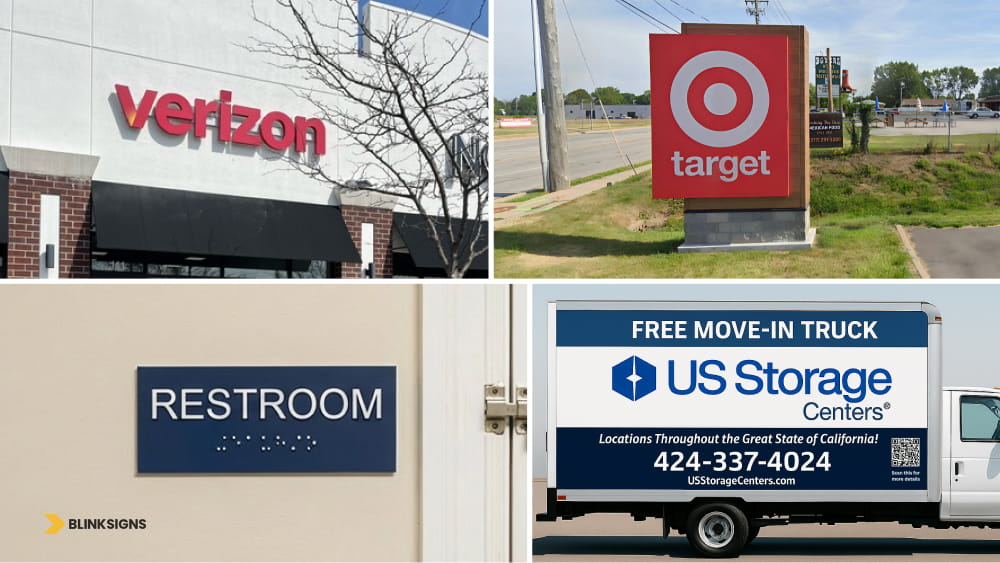
Channel Letters, Monument Signs, ADA signs and Vehicle Wraps
The master table gives a planning-level view, but many buyers need more detail on the sign type that fits their property, budget, visibility goal, and approval path. The sections below summarize the most important cost considerations and direct readers to deeper cost topics with full breakdowns.
Channel Letter Signs
Channel letters are one of the most common exterior sign types for storefronts, restaurants, franchises, retail plazas, gyms, healthcare offices, and service businesses. They are individually fabricated letters or logo elements that can be front-lit, halo-lit, non-illuminated, raceway-mounted, flush-mounted, or built as custom logo systems.
Most single-storefront illuminated channel letter projects fall in the $4,000 to $12,000 planning range before permitting, installation conditions, and site-specific requirements are factored in. The estimate can change based on letter height, logo complexity, illumination type, wall material, electrical access, landlord criteria, and installation height.
For a deeper breakdown of front-lit vs. halo-lit letters, raceway vs. flush mounting, quote inclusions, and hidden cost variables, see the full channel letter sign cost breakdown.
Monument Signs
Monument signs are permanent ground-level exterior sign structures used at property entrances, campuses, self-storage facilities, healthcare buildings, retail centers, schools, churches, hospitality properties, and multi-tenant plazas. Unlike wall-mounted signs, monument signs are often built into the site, which means foundation, electrical access, materials, landscaping, permitting, and installation conditions can all affect the budget.
Most single-tenant illuminated monument sign projects fall in the $10,000 to $30,000 planning range before foundation work, electrical, permitting, and installation conditions are factored in. Brick, masonry, LED, digital, and multi-tenant monument signs can span a wide range of planning requirements, depending on the structure, display technology, site preparation, and local authority review.
For a deeper breakdown of monument sign materials, foundation planning, installation variables, renovation options, and lifecycle maintenance, see the full monument sign cost breakdown.
ADA and Wayfinding Signs
Quantity, compliance requirements, room mapping, building layout, and installation locations usually drive ADA and wayfinding signs. A single ADA sign may be relatively simple. Still, a healthcare facility, office building, hotel, school, or campus may need a coordinated system that includes room identification, restroom signs, directional signs, floor directories, and regulatory markers.
The final project estimate can change based on tactile lettering, Braille, mounting height, room count, sign materials, installation schedule, and whether the project requires a full site audit. The permitting and compliance review path can also affect the timeline and estimate, particularly for facilities undergoing renovation or new construction.
Vehicle Wraps
Vehicle wraps are often used by service businesses, delivery fleets, contractors, franchise operators, and local brands that want mobile visibility. Pricing depends on vehicle size, coverage area, design complexity, vinyl quality, surface condition, and whether the project involves a single vehicle or multiple vehicles.
A small door graphic is different from a partial wrap, and a partial wrap is different from a full fleet program. Fleet programs also involve production scheduling, vehicle availability, surface preparation, and delivery coordination that single-vehicle projects do not require.
For deeper budgeting by vehicle type, coverage level, design complexity, and fleet rollout planning, see the vehicle wrap cost guide.
Signage ROI and Budget Justification
Commercial signage should be evaluated as a long-term visibility asset, not only as an upfront expense. Strong signage can support brand recognition, location awareness, wayfinding, customer trust, foot traffic, and multi-location consistency over time.
For single locations, ROI may come from stronger storefront visibility and improved brand presence. For multi-location brands, ROI may also come from consistent standards, smoother rollouts, better maintenance planning, and stronger customer recognition across markets.
What Is Included in a Commercial Signage Quote?
A commercial signage quote should explain the full project scope, not only the sign price. A complete quote helps buyers understand what is included, what is excluded, and which assumptions could change the final project estimate.
This matters because two commercial sign quotes can appear to describe the same sign while including very different levels of service. One quote may include site survey, design proofing, permit support, electrical assumptions, installation equipment, landlord coordination, warranty coverage, and maintenance planning. Another quote may only include fabrication and basic installation.
A professional quote should clarify each major part of the project before approval.
| Quote Item | Why It Matters |
| Site survey and field measurements | Confirms sign location, building conditions, measurements, visibility, electrical access, and installation constraints |
| Design proof and specifications | Shows the proposed layout, dimensions, placement, materials, colors, and illumination style |
| Material grade and finish details | Clarifies whether the sign uses aluminum, acrylic, polycarbonate, PVC, HDU foam, vinyl, brick, steel, LED modules, or other materials |
| Illumination assumptions | Explains whether the sign is non-illuminated, front-lit, halo-lit, internally lit, externally lit, LED, or digital |
| Permit application and filing fees | Shows whether permit support is included, itemized separately, or handled outside the quote |
| Installation labor and equipment | Clarifies labor, lift equipment, crane access, bucket truck needs, mounting method, and site access assumptions |
| Electrical scope | Identifies whether wiring, power access, drivers, electrical review, or licensed electrical work is included |
| Landlord or property manager coordination | Helps prevent delays when tenant sign criteria, property approvals, or design revisions are required |
| Warranty terms | Explains what is covered after installation and how support is handled |
| Maintenance and repair support | Clarifies whether future service, LED replacement, refacing, repairs, or scheduled maintenance is available |
A professional quote should also identify common exclusions. Existing sign removal, disposal, wall repair, electrical upgrades, permit re-submissions, engineering documentation where required, after-hours installation, or maintenance access may not be included unless they are stated clearly.
The safest way to compare commercial sign quotes is to compare scope first, then price. A lower number may not always mean a better value if important project requirements are missing.
Hidden Costs That Can Change a Commercial Signage Quote
Hidden commercial signage costs usually come from missing scope, unclear site conditions, late approvals, or assumptions that were not confirmed before fabrication. These costs are not always avoidable, but they are easier to plan for when the quote is specific.

Hidden Costs in Commercial Signage
Permit delays and re-submission fees: Local sign codes may limit sign size, height, placement, illumination, projection, or sign area. If the first submission does not meet local requirements, revisions or re-submissions may be needed.
Landlord revision rounds: Retail plazas, office parks, multi-tenant properties, and franchise locations often have sign criteria that control color, size, raceway use, lighting, placement, and materials. If the landlord review happens late, the design may need to change after the quote is prepared.
Electrical panel upgrades: Illuminated, LED, digital, and cabinet signs may require power access. If the existing electrical service is insufficient or not located near the sign area, additional electrical work may be needed.
Old sign removal and disposal: Replacing an existing sign can require removal, disposal, wall patching, paint repair, raceway removal, or surface restoration. These items should be included or excluded clearly.
Night or weekend installation: Some businesses, landlords, or property managers require installation outside normal hours to avoid customer disruption, parking conflicts, traffic issues, or blocked entrances. This can change labor planning.
Engineering documentation where required: Some signs may require engineering documentation depending on size, height, structure, wind load, foundation, local code, or authority having jurisdiction. Requirements vary by municipality and should be confirmed before approval.
Maintenance access requirements: A sign that is difficult to access after installation may cost more to service later. LED replacement, face replacement, cleaning, and repair access should be considered before the sign is installed.
Change orders after scope approval: Changes to materials, size, illumination, installation date, landlord criteria, or logo specifications after approval can affect cost and timeline.
A complete quote should eliminate these surprises by clearly stating project assumptions before fabrication begins.
Why Two Commercial Sign Quotes Can Look Completely Different
Two commercial sign quotes can vary widely because each sign company may define the scope differently. One vendor may include the full design-to-installation process. Another may quote only the fabrication of the sign face. Without a line-by-line scope comparison, the buyer may not know which quote is more complete.
A quote that includes design, permitting, equipment, electrical assumptions, installation access, warranty, and post-installation support may appear higher than one that excludes those items. The higher number may actually be the more realistic project estimate if it accounts for the full scope.
Use the table below to compare commercial signage quotes more accurately.
| Quote Area | What a Complete Quote Should Clarify |
| Design proof | Layout, dimensions, placement, colors, materials, and approval rounds |
| Materials | Substrate, faces, finishes, lighting components, mounting hardware, and durability assumptions |
| Permits | Included, excluded, or itemized separately |
| Installation | Labor, equipment, access conditions, lift needs, crane needs, and scheduling assumptions |
| Electrical | Wiring, power access, drivers, licensed work scope, and electrical review |
| Old sign removal | Included, excluded, or itemized separately |
| Warranty | Coverage terms, service process, and component support |
| Maintenance | Future access, repair planning, refacing, LED replacement, and service availability |
Before approving a quote, ask each sign company the same questions:
- Is permitting included or itemized separately?
- Is installation equipment included?
- Is electrical work included or excluded?
- Is the existing sign removal included?
- Are landlord revisions included?
- Are warranty and service terms clearly stated?
- What conditions could change the final estimate?
Clear answers make it easier to compare vendors fairly and reduce the risk of approving an incomplete quote.
How BlinkSigns Helps Control Project Complexity and Budget Risk
The goal is not the lowest quote. The goal is the most accurate scope, because an accurate scope produces a sign project that delivers on budget, on time, and on brand.
BlinkSigns helps businesses plan commercial signage across the full project lifecycle, from the initial site review through installation and long-term maintenance support. This matters because signage projects often involve several moving parts: brand design, site conditions, local code, permitting, fabrication, electrical access, installation scheduling, and future service.
Design-to-installation lifecycle management: BlinkSigns helps connect design, fabrication, permitting, installation, and maintenance planning so buyers are not left managing disconnected vendors or unclear handoffs.
Permitting coordination across jurisdictions: Local sign requirements may vary by city, zoning district, property type, and authority having jurisdiction. BlinkSigns helps coordinate permitting requirements so buyers can understand the approval path before the project moves too far forward.
SignTrax real-time project tracking: Provides clients with visibility into project stages, including survey, design, permitting, fabrication, installation, and sign-off. This is especially useful when multiple locations or approval paths are involved.
National installer network coordination: Multi-location brands need consistent standards across different markets. BlinkSigns supports installation coordination through a national network, helping businesses manage signage beyond one local project.
Maintenance and repair planning from project start: Commercial signs are long-term brand assets. BlinkSigns helps buyers plan for repair, refacing, LED replacement, tenant panel updates, cleaning, and service access before those needs become urgent.
This scope-first approach helps businesses compare quotes more clearly and reduce the risk of missing items that can affect cost, timeline, or brand consistency.
Single-Location vs. Multi-Location Signage Budgets
A single-location signage project usually has a more predictable scope. The sign company reviews one location, one municipality, one landlord approval path, one installation environment, and one timeline. Once the sign type, materials, mounting method, electrical access, and permit path are understood, the project estimate becomes clearer.
Multi-location signage programs are different. A franchise, healthcare group, retail chain, self-storage operator, restaurant brand, property portfolio, or national service business may need similar signs across many locations. However, every site can still have different conditions.
One location may need channel letters. Another may require a monument sign. One city may approve the design quickly. Another may require revisions because of sign area, height, illumination, or setback rules. One storefront may have easy access to a lift. Another may require after-hours installation because of parking, traffic, landlord rules, or customer access.
For multi-location brands, signage costs are not just about the per-sign estimate. It also includes brand standardization, permit coordination across municipalities, fabrication consistency, installer scheduling, documentation, progress tracking, and maintenance planning.
This is why multi-location buyers should think in terms of program-level scope rather than per-unit pricing. A lower per-unit quote may not create real savings if the rollout lacks consistency, project visibility, and service planning.
SignTrax helps provide real-time visibility across project locations, and BlinkSigns’ national installer network supports coordination across multiple markets.
How to Maximize Your Signage ROI
As mentioned before that a commercial signage should be treated as a long-term visibility asset, not only an upfront expense. A well-planned sign can support brand recognition, location awareness, wayfinding, customer trust, foot traffic, and multi-location consistency.
The return on signage depends on where it is placed, how visible it is, whether it aligns with the brand, how long it remains in good condition, how easy it is to maintain, and whether it helps customers find or recognize the business.
For single locations, signage ROI may come from stronger storefront visibility, clearer navigation, and improved customer recognition. For multi-location brands, ROI may also come from consistent standards, smoother rollouts, better maintenance planning, and stronger brand recognition across markets.
The lifetime value of well-planned signage often exceeds the upfront project estimate. BlinkSigns’ signage ROI model provides a framework for calculating the payback period, impression value, and long-term brand return for different sign types and locations. See the full ROI model for a detailed breakdown.
How Long Do Commercial Signs Last?
Part of maximizing signage ROI is understanding that commercial signs are long-term assets with different service intervals depending on material, sign type, and environment.
The lifespan of a commercial sign depends on the material, installation quality, climate exposure, illumination type, usage, and maintenance frequency. Different sign components may have different service intervals.
Vinyl graphics, LED components, cabinet faces, masonry structures, dimensional letters, acrylic faces, polycarbonate faces, raceways, vehicle wraps, and digital displays do not age the same way. A monument sign structure may last for many years, while its faces, tenant panels, lighting components, or painted finishes may require updates sooner.
Maintenance, repair, refacing, repainting, LED replacement, and tenant panel updates should be planned as scheduled lifecycle items, not emergency expenses. This is especially important for healthcare facilities, retail centers, self-storage operators, franchises, and property portfolios where signage supports day-to-day visibility and customer navigation.
A well-maintained sign is a long-term brand asset. The upfront project estimate is the beginning of the investment, not the end. Buyers planning multi-location programs should build maintenance and refacing budgets into their program scope from the outset.
How to Get an Accurate Commercial Signage Estimate
A more accurate signage estimate starts with better project information. The more clearly a buyer can explain the location, sign type, brand requirements, approval path, electrical access, and timeline, the easier it is to prepare a project-specific estimate.
Before requesting a commercial sign quote, prepare the following details:
Commercial Signage Quote Readiness Checklist
- Business name and logo files
- Sign location photos
- Building elevation or measurements
- Desired sign type, or open to recommendation
- Landlord or property manager requirements
- City and municipality
- Installation deadline
- Number of locations
- Existing sign removal needed, yes or no
- Electrical availability at the sign location
These details help identify the sign type, materials, installation conditions, permitting requirements, electrical scope, landlord review, and potential hidden costs before the estimate is finalized.
Not sure which sign type fits your location, budget, or brand standards? BlinkSigns can review your site, scope, and sign criteria before preparing a formal estimate.
↪ Request a Commercial Sign Estimate
Pricing and Compliance Note
The pricing ranges in this guide are provided for general budget planning only and should not be treated as fixed prices, guaranteed project costs, or final estimates. Final commercial signage estimates depend on project scope, sign type, materials, site conditions, permitting requirements, electrical access, installation complexity, municipality rules, landlord approvals, and any engineering or compliance requirements that apply to the location.
Accessibility, sign code, zoning, electrical, and permitting requirements may vary by city, property type, and authority having jurisdiction. Businesses should confirm current requirements with their local municipality, property manager, or qualified professional before approving a signage project. BlinkSigns can review project details and provide a project-specific estimate based on the location, sign type, and installation requirements.
FAQ: Commercial Sign Pricing
How much does a commercial sign cost in 2026?
Commercial signage projects typically range from $200 for simple window graphics or vinyl decals to $200,000+ for large pylon signs, LED monument systems, or national rollout programs. Most exterior storefront sign projects, including channel letters and illuminated cabinet signs, fall in the $3,000 to $20,000 planning range. Final estimates depend on sign type, materials, size, illumination, permitting, electrical access, installation conditions, and project scope.
What is the cheapest type of business sign?
Simple vinyl graphics, window decals, temporary banners, and basic interior signs are usually among the lowest-scope commercial sign types. The final estimate can still change based on size, material, design complexity, installation surface, removal needs, and quantity.
Why do channel letter signs cost more than flat signs?
Channel letter signs often cost more than flat signs because they involve dimensional fabrication, individual letters or logo elements, mounting hardware, lighting components, electrical coordination, and often permitting. Front-lit, halo-lit, raceway-mounted, and custom logo systems each carry different project requirements.
Do commercial signs require permits?
Many permanent exterior commercial signs require local sign permit review. Illuminated signs may also require an electrical review or an electrical permit. Requirements vary by municipality, zoning district, property type, landlord criteria, and authority having jurisdiction.
Who pays for sign permits?
Permit responsibility depends on the quote and project agreement. Some sign companies include permit application support in the estimate, while others itemize permit fees separately or require the business, landlord, or property manager to handle certain approvals. A complete quote should clarify who is responsible for permit filing and related fees.
How much does sign installation cost?
Sign installation cost depends on sign type, size, installation height, mounting method, wall material, site access, equipment needs, electrical access, traffic conditions, and installation schedule. Lift equipment, cranes, after-hours installation, electrical work, and site restoration can all affect the project estimate.
What affects the cost of a monument sign?
Monument sign cost depends on size, materials, foundation requirements, site preparation, illumination, electrical access, permitting, engineering documentation (where required), landscaping, installation conditions, and long-term maintenance planning. Brick, masonry, LED, digital, and multi-tenant monument signs usually require more scope than simple post-and-panel signs.
How much should a business budget for storefront signage?
Many exterior storefront sign projects fall in the $3,000 to $20,000 planning range, depending on sign type, size, materials, illumination, landlord criteria, electrical access, permitting, and installation conditions. Channel letters, cabinet signs, awning signs, and window graphics can all carry different budget requirements.
Are illuminated signs more expensive than non-illuminated signs?
Illuminated signs usually carry a higher project estimate because they require lighting components, wiring, drivers, electrical access, service planning, and sometimes electrical permit review. The final estimate depends on illumination type, sign size, mounting method, site conditions, and local requirements.
How can multi-location businesses control signage costs?
Multi-location businesses can control signage costs by standardizing design specifications, preparing brand guidelines, coordinating permits early, documenting site conditions, using consistent materials, tracking installation progress, and planning maintenance from the start. BlinkSigns supports this through national signage program management, SignTrax project tracking, and installer coordination.
What is included in a commercial sign installation quote?
A complete commercial sign installation quote should clarify design proofing, materials, illumination assumptions, permitting, electrical scope, installation labor, equipment, site access, landlord coordination, warranty terms, and maintenance support. It should also state what is excluded, such as old sign removal, wall repair, permit revisions, electrical upgrades, or after-hours installation.
How long does it take to install a commercial sign?
Commercial sign timelines depend on sign type, design approval, permit review, fabrication complexity, material availability, electrical coordination, landlord approval, and installation scheduling. Simple signs may move faster, while illuminated signs, monument signs, pylon signs, digital displays, and multi-location programs usually require more planning.
*** Pricing and Compliance Note ***

The pricing ranges in this guide are provided for general budget planning only and should not be treated as fixed prices or guaranteed project costs. Final commercial signage estimates depend on sign type, project scope, materials, site conditions, permitting requirements, electrical access, installation complexity, municipality rules, landlord approvals, and any engineering or compliance requirements that apply to the location.

Accessibility, sign code, zoning, electrical, and permitting requirements may vary by city, property type, and authority having jurisdiction. Businesses should confirm current requirements with their local municipality, property manager, or qualified professional before approving a signage project. BlinkSigns can review project details and provide a project-specific estimate based on the location, sign type, and installation requirements.