
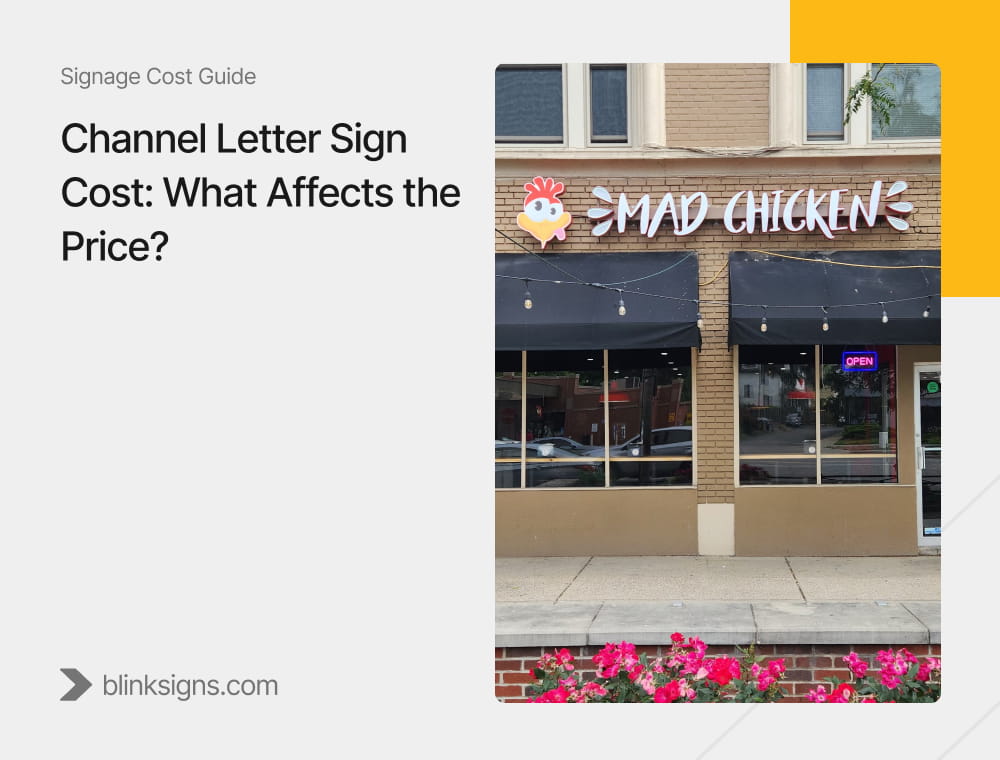
Channel Letter Sign Cost: What Affects the Price? (2026 Guide)
How much does a channel letter sign cost?
Channel letter sign projects typically range from $2,000 for a simple non-illuminated set to $20,000+ for large illuminated systems with complex logos, premium materials, or multi-location brand standards. Most single-storefront illuminated channel letter projects fall in the $4,000 to $12,000 planning range before permitting, installation conditions, and site-specific requirements are factored in. Every project estimate depends on scope.
At BlinkSigns, channel letter sign budgets are built around the full project scope: design, permitting, fabrication, installation, and ongoing maintenance, not just the fabrication of the letters themselves.
Channel letters are among the most common sign types because storefronts, restaurants, franchise locations, retail plazas, healthcare offices, service businesses, and multi-location brands use them. They are highly visible, brand-specific, and often illuminated, which also means their pricing depends on more than the letters alone.
A buyer comparing channel letter sign pricing should look beyond the visible sign face. The full project estimate may include logo preparation, dimensional fabrication, LED components, electrical coordination, wall attachment, landlord approval, sign permits, installation equipment, and long-term service access. Two signs that appear similar from the street can have very different budgets once these project variables are included.
That is why this guide is written as a quote-readiness resource rather than a generic price list. It explains what affects channel letter sign cost, why quotes can differ, what should be included in a professional estimate, and how to prepare the right project details before requesting a quote.
What Are Channel Letter Signs?
Channel letters are individually fabricated, three-dimensional letters, numbers, or logo elements used to identify a business, storefront, building, or commercial location. Each letter is usually built as its own component, with a separate housing, face, return, mounting system, and, in many projects, an internal light source.
They are common on storefronts, restaurants, retail plazas, medical offices, banks, gyms, hotels, service businesses, and franchise locations because they create a strong visual presence from the street. Channel letters can be built to match specific brand colors, fonts, logo shapes, lighting styles, and property requirements, which makes them especially useful for brands that need a polished exterior identity.
Every channel letter set is custom-fabricated. There is no fixed price for a universal “standard” set because the final project estimate depends on the exact dimensions, number of letters, materials, illumination type, mounting method, electrical access, permitting requirements, and installation conditions.
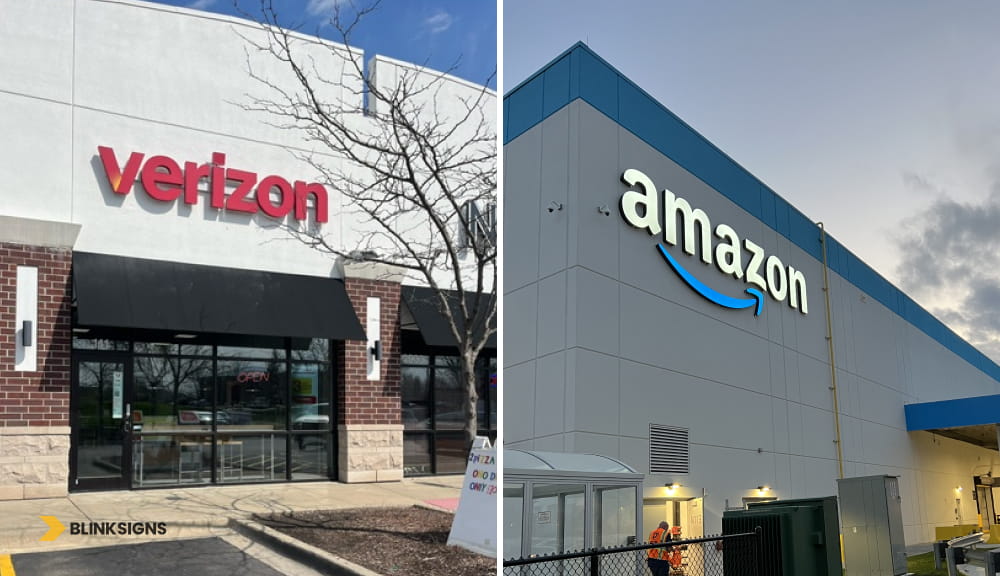
Channel Letter Signs for Verizon franchise and Amazon facility
Channel Letter Sign Cost by Type
The table below provides typical planning ranges by channel letter type. These are budget-planning estimates, not fixed prices. Final channel letter sign estimates may vary by project scope, sign type, materials, illumination, mounting method, electrical access, permitting requirements, landlord approvals, installation conditions, and local authority review.
| Channel Letter Type | Typical Planning Range | Best For | Main Cost Drivers | Complexity Level |
| Non-illuminated channel letters | $2,000 to $8,000+ | Daytime visibility, interior branding | Size, material, finish, mounting | Medium |
| Front-lit channel letters | $3,000 to $15,000+ | Retail, restaurants, franchises | LED modules, acrylic faces, wiring, installation | High |
| Halo-lit or reverse-lit letters | $4,000 to $20,000+ | Premium storefronts, offices, and hospitality | Backlighting, standoffs, wall surface, and electrical | High |
| Raceway-mounted letters | $3,500 to $18,000+ | Multi-tenant buildings, landlord-controlled properties | Raceway fabrication, wiring, and landlord rules | High |
| Custom logo systems | $5,000 to $25,000+ | Franchise brands, multi-location businesses | Logo complexity, color matching, mixed materials | Critical |
| Multi-location programs | Custom quoted | Enterprise, franchise, retail rollouts | Quantity, permitting, brand standards, and installer coordination | Critical |
Non-illuminated channel letters usually sit toward the lower end of the planning range because they do not require LED modules, drivers, wiring, or electrical review. The estimate can still change based on letter height, material thickness, finish quality, mounting surface, installation height, and whether the letters are installed indoors or outdoors.
Front-lit channel letters are the most common illuminated option for storefronts, restaurants, and franchise locations. The estimate can change based on acrylic face size, trim cap, LED module quality, letter depth, raceway requirements, electrical access, installation height, and the complexity of the logo or letterforms.
Halo-lit or reverse-lit letters often carry a higher project estimate than front-lit letters with the same footprint because the light is projected behind each letter, creating a glow effect on the wall. This requires proper spacing, standoffs, proper electrical routing, and a wall surface that reflects light cleanly.
Raceway-mounted letters can increase the budget because they are installed on a surface-mounted box that houses electrical components and wiring. The estimate depends on raceway size, finish, wall material, landlord requirements, electrical access, and whether the raceway is being used to simplify service access or meet property criteria.
Custom logo systems cost more when the sign includes irregular shapes, brand marks, custom colors, mixed materials, layered elements, or multiple illumination styles. Franchise and multi-location brands often require strict color matching, approved typography, and specific fabrication standards, which can increase both review time and production complexity.
Multi-location channel letter programs are custom-quoted because budgets are not based on a single sign. These programs involve standardized design specifications, cross-jurisdiction permitting, coordinated fabrication timelines, and installation management across markets. A per-unit project estimate does not fully capture that scope.
The ranges in this guide are provided for budget planning only. Final channel letter sign estimates depend on project scope, sign type, materials, illumination, mounting method, electrical access, permitting requirements, landlord approvals, installation conditions, and local authority review.
What Affects Channel Letter Sign Pricing?
Channel letter sign pricing is shaped by both the sign itself and the environment where it will be installed. A professional quote should explain which of the following variables apply to the project and how they affect the estimate.
Letter Size and Height
Larger letters require more aluminum, acrylic or polycarbonate, paint, trim, LEDs, wiring, and mounting hardware. Letter height also affects installation planning, as larger letters may be heavier, require stronger attachment points, and require additional equipment during installation.
Visibility goals also affect letter size. A storefront on a pedestrian street may not require the same letter height as a business located along a high-traffic road or set back from the street. The farther away the sign needs to be seen, the more letter size, contrast, illumination, and placement matter.
Number of Letters and Logo Complexity
A simple wordmark with short text is usually easier to fabricate than a long business name, custom icon, or multi-color logo system. Each additional letter adds material, fabrication time, mounting points, and installation labor.
Logo complexity can also affect cost. Curved shapes, custom fonts, tight letter spacing, small internal details, and multi-color finishes require more fabrication precision. For franchise or retail brands, additional time may be needed to match approved brand standards, color codes, and logo specifications.
Illumination Type
Illumination is one of the biggest cost drivers for channel letter signs. Non-illuminated letters are usually less complex because they do not require lighting components or electrical work. Front-lit, halo-lit, combination-lit, and RGB LED systems add lighting hardware, wiring, power supplies or drivers, electrical coordination, and often electrical permit review.
The final project estimate depends on the type of lighting, the number of letters, the size of each letter, the required brightness, the electrical path, and whether the sign must meet landlord or municipal illumination rules.
Raceway Mount vs. Flush Mount
Mounting method affects both appearance and installation complexity. Raceway mounting places letters on a surface-mounted structure that holds electrical components and wiring. Flush mounting attaches letters more directly to the wall and routes wiring through the building surface.
This section is only an overview, as the mounting method warrants a deeper comparison later in the article. The key point is that both options can be appropriate depending on the building, wall material, landlord criteria, electrical access, and desired appearance.
Materials and Finishes
Common channel letter materials include aluminum returns, acrylic faces, polycarbonate faces, trim cap, LED modules, drivers, wiring, raceways, standoffs, and mounting hardware. Premium finishes, specialty paints, stainless steel, brushed metal, thicker acrylic, and custom color-matching can increase the project estimate.
Material selection also affects durability and maintenance. Lower-quality components may reduce the initial estimate, but they can increase long-term service needs if lighting fails, faces discolor, or finishes deteriorate faster than expected.
Electrical Access and Infrastructure
Illuminated channel letters require proper electrical access. If power is already available near the sign location, the project may be more straightforward. If new electrical service, additional wiring, a dedicated circuit, or a panel upgrade is needed, the estimate can change.
Electrical assumptions should be stated clearly in the quote. Buyers should confirm whether electrical connection, wiring, power supplies, and electrical permitting are included, excluded, or handled by a separate licensed electrician.
Installation Height and Equipment
Installation height directly affects labor and equipment costs. A low storefront sign with easy access is different from a sign mounted high above a retail plaza, above an awning, on masonry, or near traffic.
Boom lifts, cranes, scaffolding, parking access, traffic control, wall surface conditions, and after-hours installation requirements can all affect the project estimate. A site survey helps identify these variables before fabrication begins.
Permit and Landlord Approvals
Most permanent exterior channel letter signs require local sign permit review, and illuminated signs may also require electrical review or an electrical permit. Permit requirements, timelines, allowable sign area, brightness rules, letter height, and installation standards may vary by municipality and authority having jurisdiction.
Landlord approval can also affect the scope. Many retail centers, commercial buildings, and multi-tenant properties have sign criteria that control size, color, mounting method, raceway use, illumination type, and placement. If the landlord requires revisions after the initial design, the timeline and estimate may change.
Multi-Location Rollout Requirements
Multi-location channel letter projects are more complex than single storefront projects because each location may have different wall conditions, landlord rules, municipal codes, electrical access, and installation constraints. Even when the brand design is standardized, the site conditions are not.
Program-level estimates must account for site surveys, design standardization, permitting across jurisdictions, fabrication scheduling, installer coordination, project tracking, and final verification across all locations. That is why multi-location channel letter programs should be planned as signage programs, not isolated sign orders.
Front-Lit vs. Halo-Lit Channel Letters: Cost Differences
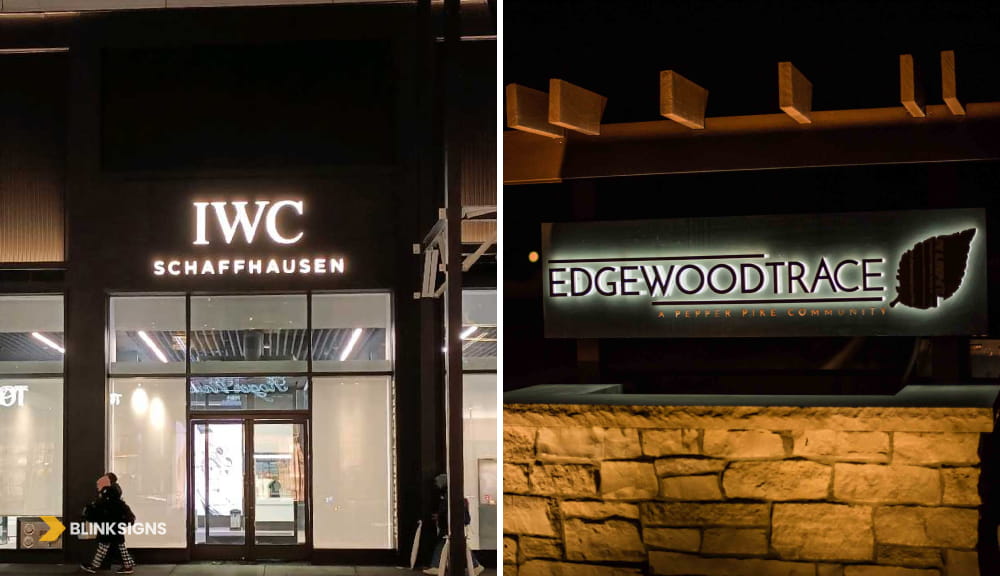
Front-Lit and Halo-Lit Channel Letters
Front-lit and halo-lit channel letters are both illuminated options, but they create different visual effects and carry different project requirements.
Front-lit channel letters illuminate through the face of each letter. They are the most common illuminated channel letter type for retail storefronts, restaurants, service businesses, and franchise locations because they provide strong direct visibility, especially at night or in low-light conditions.
Halo-lit channel letters, also called reverse-lit letters, project light from behind the letter onto the wall surface. This creates a glow around the letter rather than lighting the face. Halo-lit signs are often used by premium storefronts, corporate offices, hospitality brands, healthcare facilities, and businesses seeking a more refined exterior appearance.
Halo-lit letters often carry a higher project estimate than front-lit letters with the same footprint because they require backlighting, standoffs, careful spacing from the wall, clean electrical routing, and a wall surface that can reflect light evenly. A dark, textured, uneven, or highly reflective wall surface may affect the final look of the halo effect.
Combination-lit channel letters illuminate from both the face and the back, which usually makes them the most complex of the common illuminated options. These signs can create a strong visual impact, but they require more lighting components, more wiring, and more careful fabrication.
Brand standards may also dictate the choice. A franchise system, retail brand, or corporate tenant may require front-lit, halo-lit, or specific color temperatures regardless of buyer preference. Local sign codes or landlord criteria may also limit illumination brightness, animation, color, or placement.
The best option depends on the brand, building surface, visibility needs, sign code, and budget. A professional quote should clarify how the lighting type affects fabrication, electrical work, permitting, installation, and long-term service.
Raceway vs. Flush Mount: Why Mounting Method Changes Cost
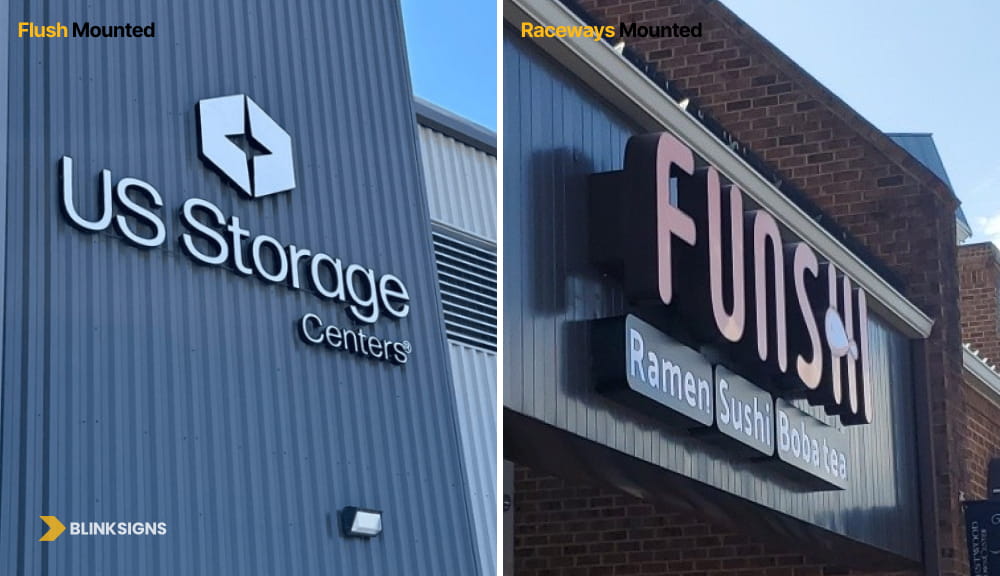
Raceway vs. Flush Mount
The mounting method can change both the look and the cost of a channel letter sign. The two most common approaches are raceway mounting and flush mounting.
Raceway mounting can simplify wiring and service access by consolidating electrical components into one surface-mounted structure. In some projects, this may reduce wall penetration and installation complexity, though the final project estimate depends on building conditions, wall material, installation height, and landlord requirements.
Flush-mounting routes wiring through the wall often creates a cleaner appearance. Still, it may require more wall penetration, electrical coordination, and installation labor, depending on wall material, access, and landlord requirements.
A raceway is often used on multi-tenant buildings, retail plazas, or properties where the landlord wants to limit wall penetrations. It can also make future service easier because wiring and power supplies are consolidated into one accessible structure. However, a raceway changes the sign’s visual profile and may need to be painted or finished to match the building facade.
Flush-mounted letters often create a more refined look because each letter appears individually attached to the wall. This approach can work well when the wall is suitable for penetration, electrical access is available, and the landlord or municipality allows that mounting method. It can become more complex on masonry, EIFS, metal panel, glass, or walls with limited interior access.
Neither mounting method is automatically better. The right choice depends on the building, brand standards, landlord criteria, electrical access, wall material, service access, and project budget.
What Should Be Included in a Channel Letter Sign Quote?
A channel letter sign quote should do more than show a final number. It should explain the full project scope so the buyer can understand what is included, what is excluded, and which assumptions could change the project estimate later.
This matters because two-channel letter quotes can look very different even when they appear to describe the same sign. One quote may include design proofing, permitting, electrical assumptions, lift equipment, landlord coordination, and warranty support. Another may only include fabrication and basic installation. Without a clear scope, the lower number may not represent the more complete project.
A professional channel letter sign quote should clarify the following items:
| Quote Item | Why It Matters |
| Design proof and letter specifications | Confirms letter height, depth, materials, colors, illumination style, logo treatment, and placement |
| LED and electrical assumptions | Clarifies whether lighting components, drivers, wiring, and electrical access are included |
| Mounting method | Shows whether the sign will be raceway-mounted, flush-mounted, or installed with another method |
| Permit application and filing fees | Identifies whether permitting is included, itemized separately, or handled outside the quote |
| Installation labor and equipment | Clarifies labor, lift equipment, access needs, wall conditions, and installation schedule |
| Landlord coordination | Shows whether the property manager or landlord sign criteria are included in the review process |
| Warranty terms | Explains what is covered after installation, including lighting components or artistry, where applicable |
| Maintenance and service support | Helps buyers understand how future repairs, LED service, or access needs will be handled |
A complete quote should also identify exclusions. If existing sign removal, wall repair, electrical upgrades, permit re-submissions, engineering documents, or after-hours installation are not included, those items should be stated clearly before approval.
The safest way to compare channel letter quotes is to compare scope first, then price. Once every vendor has clarified the same line items, the buyer can more accurately evaluate the true project estimate.
Hidden Costs That Can Change a Channel Letter Quote
Channel letter signs involve fabrication, lighting, mounting, permitting, and installation. Because several trades and approvals can be involved, certain costs may appear later if they are not addressed during the early quote stage.
Permit revisions or resubmission fees: If the local authority rejects the first permit submission due to sign area, placement, illumination, zoning, or missing documentation, revisions may be required. These changes can affect both cost and timeline.
Landlord-required design changes: Many retail centers, commercial plazas, and franchise properties have sign criteria that control letter height, raceway use, color, illumination type, or placement. If the landlord requests changes after the first design proof, additional design or approval rounds may be needed.
Electrical panel upgrades: Illuminated channel letters require proper electrical access. If the existing electrical service cannot support the sign, additional electrical work may be needed before installation can be completed.
Old sign removal and wall repair: Replacing an existing sign may require removing the old sign, patching, repainting, or repairing the mounting surface. If the quote assumes a clean installation surface, these costs may not be included.
Lift or crane access requirements: Installation height, parking conditions, canopy placement, wall access, and traffic flow can affect whether a boom lift, crane, scaffolding, or special access planning is required.
After-hours or weekend installation: Some landlords or businesses require installation outside normal hours to reduce disruption. This can add labor complexity to the project estimate.
Structural engineering documentation: Larger signs, certain wall conditions, or specific municipal requirements may require structural documentation before approval. This can affect the timeline and total project scope.
Service access limitations after installation: If a sign is difficult to access for future LED replacement, cleaning, or repair, long-term maintenance may become more expensive. Service access should be considered before the sign is installed.
The best way to reduce these surprises is to define the scope early. A site survey, code review, landlord criteria review, and electrical access check can help identify these variables before fabrication begins.
Channel Letter Signs for Single Locations vs. Multi-Location Brands
A single-location channel letter project usually has a more predictable planning path. The sign company reviews one building, one municipality, one landlord approval path, one electrical condition, and one installation environment. Once the sign type, size, mounting method, permit requirements, and installation access are understood, the project estimate becomes clearer.
Multi-location channel letter programs are different. A franchise, retail chain, healthcare group, restaurant brand, self-storage operator, or service business may need similar signs across multiple properties, but every location can still create different project conditions.
One location may allow flush-mounted front-lit letters. Another may require raceway-mounted letters because of landlord rules. One city may approve the design quickly. Another may require revised drawings, additional documentation, or electrical review. One storefront may have easy access to a lift. Another may require after-hours installation due to traffic, parking, or tenant restrictions.
For multi-location brands, the budget is not only about the cost of each sign. It also includes brand standardization, site surveys, permitting across jurisdictions, fabrication scheduling, installer coordination, documentation, project tracking, and final verification.
That is why multi-location buyers should think in terms of program-level scope rather than per-sign pricing. A lower per-unit fabrication estimate may not yield real savings if the project lacks consistent specifications, permit tracking, installation coordination, and visibility across all locations.
BlinkSigns supports this type of planning through national signage program management, where design standards, permitting, fabrication, installation, and project tracking are coordinated across multiple markets. SignTrax provides real-time visibility into the status of design, permitting, fabrication, and installation across locations, helping teams track progress without manually managing every site.
How BlinkSigns Helps Plan Channel Letter Sign Projects
Channel letter projects can involve many moving parts: design, sign criteria, landlord approval, permitting, fabrication, electrical coordination, installation, and long-term service. BlinkSigns helps businesses plan these variables before they become budget surprises.
Site survey and field measurements: BlinkSigns begins by reviewing the installation location, wall conditions, sign placement, electrical access, visibility needs, and site constraints. This helps shape a more accurate project-specific estimate.
Design and specification for brand or code compliance: Channel letters must match the brand while also fitting property and municipality requirements. BlinkSigns helps translate logos, colors, typography, illumination preferences, and sign criteria into buildable specifications.
Permitting coordination across jurisdictions: Sign permit requirements may vary by municipality, property type, and authority having jurisdiction. BlinkSigns supports permitting coordination so the project is planned with local review requirements in mind.
Fabrication with UL-listed components where applicable: Illuminated channel letter signs may require electrical components and wiring that meet appropriate safety and performance expectations. BlinkSigns plans fabrication around the specifications required for the sign type, location, and project scope.
Installation coordination through a national installer network: For single-location projects, this helps align scheduling, equipment, and site access. For multi-location programs, it helps coordinate installation across markets through a centralized process.
SignTrax project tracking: SignTrax helps clients see where projects stand across design, permitting, fabrication, and installation milestones. For multi-location buyers, this visibility is especially valuable because different sites may move through the process at different speeds.
Maintenance and repair planning from the start: Channel letter signs may require future LED service, cleaning, face replacement, wiring checks, or repair after weather exposure or accidental damage. Planning for service access early helps reduce long-term maintenance friction.
The goal is not to make channel letter projects feel more complicated than they are. The goal is to define the real scope clearly so buyers can make confident decisions before approving the estimate.
⤷ Download our free Channel Letter Sign Quote Checklist.pdf
How to Get an Accurate Channel Letter Sign Estimate
A more accurate channel letter estimate starts with better project information. A sign company can provide stronger recommendations when it understands the building, the brand, the installation location, the desired lighting style, and any approval requirements.
Before requesting a quote, prepare the following details:
Channel Letter Quote Readiness Checklist
- Storefront photos, including street-facing and close-up views
- Building measurements, including fascia width and height
- Logo and brand files
- Desired illumination style, or openness to vendor recommendation
- Landlord signs the criteria document, if available
- City and municipality
- Existing electrical access at the sign location
- Installation deadline or target opening date
- Number of locations, if multi-site
- Existing sign removal needed, yes or no
These details help the sign company identify key cost variables before preparing the quote. They also help reduce later changes related to landlord approvals, permitting, electrical access, or installation conditions.
Not sure which channel letter type fits your building, brand standards, or budget? BlinkSigns can review your storefront, sign criteria, and installation conditions before preparing a formal estimate.
⤷ Request a Channel Letter Sign Estimate │ ⤷ See the Full Commercial Signage Cost Guide
FAQ: Channel Letter Sign Cost
How much does a channel letter sign cost?
Channel letter sign projects typically range from $2,000 for a simple non-illuminated set to $20,000+ for large illuminated systems, custom logos, premium materials, or multi-location brand standards. Most single-storefront illuminated channel letter projects fall in the $4,000 to $12,000 planning range before permitting, installation conditions, and site-specific requirements are factored in.
What is the typical planning range for illuminated channel letters?
Illuminated channel letters often fall within the $3,000-$20,000+ range as a planning range, depending on letter size, lighting style, logo complexity, electrical access, mounting method, and installation conditions. Front-lit letters usually sit lower than halo-lit, combination-lit, or custom illuminated systems with complex brand requirements.
Are halo-lit channel letters more expensive than front-lit letters?
Halo-lit channel letters often carry a higher project estimate than front-lit letters with the same footprint because they require backlighting, standoffs, wall spacing, clean electrical routing, and a suitable wall surface for the glow effect. Final cost depends on the design, materials, wall conditions, electrical access, and installation requirements.
Do channel letter signs require permits?
Most permanent exterior channel letter signs require a local sign permit. Illuminated channel letters may also require an electrical review or an electrical permit, depending on the municipality and authority having jurisdiction. Permit requirements, fees, and timelines may vary by location.
What is a raceway-mounted channel letter sign?
A raceway-mounted channel letter sign places the letters on a surface-mounted structure that houses wiring and electrical components. Raceways can simplify wiring and service access in some projects, and they are often used on multi-tenant buildings or properties where landlords want to reduce wall penetrations.
Can channel letters be installed without a raceway?
Yes, channel letters can often be flush-mounted directly to a wall, but the suitability depends on wall material, access, electrical routing, landlord criteria, and local code requirements. Flush mounting can create a cleaner appearance, but it may require greater wall penetration and coordination with the installer.
How long does it take to make and install channel letters?
Channel letter timelines depend on design approval, permit review, fabrication complexity, electrical coordination, and installation scheduling. A simple project may move faster, while illuminated signs, landlord approvals, or municipal permit reviews can add several weeks. Multi-location programs require additional coordination across sites and jurisdictions.
What affects channel letter installation cost?
Installation costs are affected by sign height, mounting method, wall material, lift or crane requirements, electrical access, site conditions, parking or traffic restrictions, and after-hours installation requirements. A site survey helps identify these variables before preparing a final project estimate.
How long do LED channel letters last?
LED channel letter lifespan depends on LED quality, power supplies, installation conditions, weather exposure, usage hours, and maintenance. Many LED components are designed for long service life, but eventual service or replacement may still be needed. Warranty terms and maintenance support should be clarified in the quote.
Are channel letters good for franchises?
Yes. Channel letters are a strong option for franchises because they can be built to match brand colors, fonts, logo shapes, illumination standards, and storefront criteria across multiple locations. Franchise signage programs should also account for landlord approvals, municipality-specific permits, installation conditions, and brand compliance requirements.
Can BlinkSigns manage channel letters across multiple locations?
Yes. BlinkSigns supports multi-location signage programs through design standardization, permitting coordination, fabrication planning, installation coordination, SignTrax project tracking, and maintenance planning. This helps franchise, retail, restaurant, healthcare, and service brands manage channel letter projects across different markets.
What should I prepare before requesting an estimate for a channel letter sign?
Prepare storefront photos, building measurements, logo files, desired illumination style, landlord sign criteria, city and municipality, electrical access information, installation deadline, number of locations, and whether existing sign removal is needed. These details help BlinkSigns prepare a more accurate project-specific estimate.
Conclusion
Channel letter sign costs depend on more than just the letters themselves. Size, illumination, mounting method, materials, electrical access, permits, landlord requirements, installation conditions, and long-term service needs all influence the final project estimate.
The best way to budget for channel letters is to understand the typical planning range, clarify what is included in the quote, and prepare the right project details before requesting an estimate. BlinkSigns helps businesses plan channel letter projects with clearer scope, better project visibility, and support from design through installation and maintenance.
Ready to plan your channel letter sign project? Request a channel letter sign estimate from BlinkSigns and receive a project-specific quote tailored to your storefront, brand standards, location, and installation requirements.
*** Pricing and Compliance Note ***

The pricing ranges in this guide are provided for general budget planning only and should not be treated as fixed prices or guaranteed project costs. Final commercial signage estimates depend on sign type, project scope, materials, site conditions, permitting requirements, electrical access, installation complexity, municipality rules, landlord approvals, and any engineering or compliance requirements that apply to the location.

Accessibility, sign code, zoning, electrical, and permitting requirements may vary by city, property type, and authority having jurisdiction. Businesses should confirm current requirements with their local municipality, property manager, or qualified professional before approving a signage project. BlinkSigns can review project details and provide a project-specific estimate based on the location, sign type, and installation requirements.