
Illuminated Sign Cost Guide: What Affects Lighted Business Sign Pricing
The cost of an illuminated sign depends on the sign type, lighting method, size, materials, fabrication complexity, mounting location, electrical coordination, installation access, permit requirements, and maintenance needs. A lighted cabinet sign, LED channel letter sign, halo-lit storefront sign, illuminated monument sign, pylon sign, and electronic message center are different projects. They should not be priced the same way.
For early planning, buyers should separate smaller storefront signs, standard illuminated sign packages, custom-fabricated signs, freestanding illuminated signs, and programmable electronic message center projects, as each scope has a different cost structure. Public market examples can be useful for orientation. Still, they may describe product-only signs, fabricated signs, installed signs, or complete projects with electrical coordination, permits, removal, access equipment, service planning, and site-specific requirements.
These figures should be treated as market context, not BlinkSigns pricing. Online illuminated sign prices often measure different scopes. One example may describe only the sign product. Another may include fabrication. Another may include installation. Another may include permit support, electrical coordination, removal of old signs, landlord review, or multi-location rollout planning.
The most useful question is not only:
How much does an illuminated sign cost?
The better question is:
What type of illuminated sign is being quoted, and does the quote include fabrication, lighting components, installation, electrical coordination, permits, removal, service access, and maintenance planning?
BlinkSigns helps commercial teams move from a rough sign idea to a defined commercial signage scope that can be reviewed, fabricated, installed, tracked, and maintained with clearer ownership.
Illuminated sign cost planning model
Illuminated sign budgets are best understood by scope level. A smaller lighted storefront sign, a standard channel letter package, a custom halo-lit sign, an illuminated monument sign, a pylon sign, and an electronic message center are not the same project.
The table below is a planning model, not a rate card. It is designed to help buyers understand why one illuminated sign quote may differ greatly from another.
| Illuminated sign scope | Planning range category | What may change the budget |
| Small lighted storefront sign or simple cabinet sign | Lower commercial planning range | Size, face material, lighting method, mounting location, electrical access, and landlord criteria |
| Standard illuminated channel letter package | Mid-level commercial planning range | Letter count, logo complexity, LED modules, raceway or flush mount, wall condition, permit requirements |
| Halo-lit or custom premium storefront sign | Mid to higher planning range | Letter depth, finish, lighting effect, wall surface, fabrication detail, installation conditions |
| Illuminated monument sign | Higher planning range | Base structure, sign materials, lighting method, electrical access, landscaping, permits, service access |
| Illuminated pylon sign | Higher to major project range | Height, structure, double-sided visibility, access equipment, electrical coordination, permit requirements |
| Electronic message center | Specialized project range | Display size, pixel pitch, brightness, software, structure, content controls, service access |
| Multi-location illuminated signage rollout | Program-level planning range | Site surveys, standards, approvals, fabrication consistency, installation tracking, and maintenance coordination |
This model helps buyers compare the scope before comparing prices. A product-only sign, an installed storefront sign, a permitted exterior sign, and a managed multi-location signage program are different buying decisions.
Compare electrical components, power supplies, and installation fees line by line.
Download the Illuminated Sign type Comparison Worksheet now.↘
What affects illuminated sign pricing most?
Illuminated sign pricing is mainly affected by:
- Sign type: channel letters, cabinet signs, lightbox signs, halo-lit letters, LED neon-style signs, monument signs, pylon signs, or electronic message centers
- Lighting method: face-lit, halo-lit, backlit, internally illuminated, exposed neon-style, LED-based, or programmable digital illumination
- Size and scale: letter height, sign width, cabinet size, sign face area, and display area
- Materials: aluminum, acrylic, polycarbonate, stainless steel, routed faces, push-through acrylic, trim cap, raceway, cabinet frame, or monument materials
- Fabrication complexity: custom logos, multi-color faces, layered letters, specialty finishes, shaped cabinets, and brand-specific details
- Mounting method: raceway mount, flush mount, wall mount, cabinet mount, monument integration, pylon integration, or freestanding structure
- Electrical coordination: power access, lighting components, LED drivers, power supplies, transformers, qualified review, and field coordination
- Installation conditions: height, access, wall surface, storefront conditions, road frontage, working-hour restrictions, lift access, and removal of existing signage
- Permit requirements: local sign rules, landlord criteria, tenant sign criteria, illumination rules, size limits, placement, and approval process
- Service access: future access to LED modules, drivers, power supplies, sign faces, cabinet interiors, and repair points
- Maintenance needs: cleaning, lighting repairs, face replacement, driver replacement, seal review, and long-term visibility planning.
- Multi-location needs: standards, surveys, approvals, fabrication consistency, installation coordination, and SignTrax visibility where applicable.
Identify unexpected line items for power supplies, lift rentals, and secondary wiring before approving a vendor estimate.
Download the BlinkSigns Lighted Sign Scope and Hidden Cost Checklist now.↘
Illuminated sign cost should be estimated by sign type and full project scope, not by illumination alone. Buyers should confirm the sign format, lighting method, materials, installation conditions, electrical coordination, permit requirements, service access, and maintenance responsibilities before comparing quotes.
Market pricing context: why lighted sign numbers vary
Public illuminated sign pricing can look inconsistent because different sources measure different parts of the project.
Some examples refer to:
- Sign product without field scope: the sign face, letters, cabinet, or lighting components before local installation
- Fabricated sign package: the manufactured sign before final field conditions are confirmed
- Installed storefront sign: fabricated signage plus mounting and installation scope
- Illuminated channel letters: individual letters with LED modules, power supplies, raceway or flush mounting, and logo fabrication
- Cabinet or lightbox sign: illuminated sign cabinet with translucent face and internal lighting
- Halo-lit or backlit sign: dimensional letters designed to cast light behind the letters or onto the wall surface
- Monument or pylon sign: illuminated signage integrated into freestanding structures
- Electronic message center: programmable LED sign with display, software, brightness controls, structure, and service requirements
- Multi-location program: signage standards, site surveys, approvals, fabrication coordination, installation tracking, and maintenance planning
A buyer comparing illuminated sign quotes should ask:
- Is the quote for a sign product, an installed sign, or a full project scope?
- Does it include design and fabrication?
- Does it include lighting components?
- Does it include installation?
- Does it include electrical coordination?
- Does it include permit support where relevant?
- Does it include landlord or tenant sign criteria review?
- Does it include the removal of an old sign?
- Does it include surface repair, patching, or disposal?
- Does it include service access planning?
- Does it include maintenance expectations?
- Is it for one location or multiple locations?
A reliable illuminated sign budget starts by defining the sign type and the scope of the quote before comparing prices.
**Pricing note**

This guide uses public market context and scope-based planning. It does not guarantee a BlinkSigns price, nor does it combine multiple public price examples into a single average.

The final illuminated sign cost depends on the selected sign type, lighting method, sign size, materials, fabrication complexity, mounting method, electrical access, installation conditions, permit requirements, landlord criteria, property rules, service access, maintenance expectations, and whether the project is for a single location or a multi-location rollout.
What is an illuminated sign?
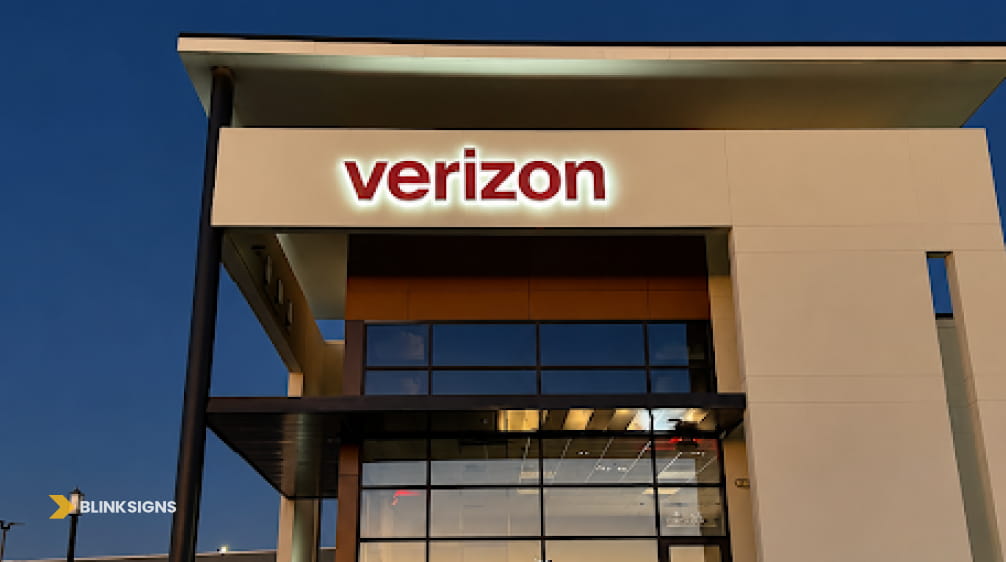
Halo-lit channel letters for commercial storefronts.
An illuminated sign is a business sign that uses built-in or attached lighting to improve visibility. The lighting may be inside the sign face, inside individual letters, behind the letters, around the sign, inside a cabinet, inside a monument structure, or within a programmable LED display.
Illuminated signage is a lighting category, not a single sign product. Channel letters, cabinet signs, lightbox signs, halo-lit letters, neon-style signs, monument signs, pylon signs, and electronic message centers can all be illuminated signs, but they have different cost structures.
Common illuminated sign types include:
- Front-lit channel letters
- Halo-lit channel letters
- Combination-lit channel letters
- Cabinet signs
- Lightbox signs
- Backlit signs
- Push-through acrylic signs
- LED neon-style signs
- Traditional neon signs
- Illuminated storefront signs
- Illuminated monument signs
- Illuminated pylon signs
- Electronic message centers
An illuminated sign is related to an LED sign, but the terms are not always identical. Many modern illuminated signs use LED modules or LED lighting components. However, not every illuminated sign is described by buyers as an LED sign, and not every LED sign has the same structure or installation scope.
For example, an LED channel letter sign is different from an LED cabinet sign. A halo-lit sign is different from a front-lit sign. An illuminated monument sign is different from a storefront lightbox. An electronic message center is different from fixed illuminated letters.
That is why the first step in budgeting is to identify what kind of illuminated sign you are pricing.
Who is this illuminated sign cost guide for?
This guide is for business owners, marketing teams, property managers, franchise operators, facility teams, architects, contractors, schools, healthcare groups, restaurants, retail brands, and multi-location organizations planning lighted commercial signage.
It is especially useful if you are asking:
- How much does an illuminated sign cost?
- What affects lighted business sign pricing?
- What is the difference between an illuminated sign and an LED sign?
- What is the difference between a backlit sign and a halo-lit sign?
- Are channel letters considered illuminated signs?
- Are cabinet signs the same as lightbox signs?
- What affects the cost of an illuminated storefront sign?
- What affects the cost of an illuminated monument sign?
- Does an illuminated sign need a permit?
- Does an illuminated sign require electrical work?
- What hidden costs should buyers check?
- How should a multi-location brand plan illuminated signs?
- When is an illuminated sign not the right fit?
The best illuminated sign decision starts with the sign environment. A storefront may need channel letters or a lightbox. A shopping center tenant may need to follow the landlord’s sign criteria. A medical office may need a clean, illuminated monument sign. A restaurant may need stronger nighttime visibility. A franchise may need consistent sign standards across many properties. A roadside business may need a pylon sign or illuminated cabinet sign. A school, church, or campus may need an electronic message center for changeable public-facing messages.
Each use case leads to a different scope and budget.
Illuminated sign cost factors at a glance
Illuminated sign budgets are easier to understand when the main cost categories are separated. This table is a planning framework, not a rate card.
| Cost factor | What it includes | What buyers should clarify |
| Sign type | Channel letters, cabinet, lightbox, halo-lit sign, monument, pylon, EMC | Which sign format is actually being quoted |
| Lighting method | Front-lit, halo-lit, backlit, internally illuminated, LED, neon-style | How the sign is lit and what lighting components are included |
| Size and scale | Letter height, sign width, cabinet size, display area | Whether the size fits the visibility, code, landlord, and budget needs |
| Materials | Acrylic, polycarbonate, aluminum, stainless steel, faces, trims, returns | Outdoor suitability, brand appearance, durability, and service needs |
| Fabrication complexity | Logos, custom shapes, routed faces, push-through acrylic, layered details | Whether the design requires custom production beyond standard letters or cabinets |
| Mounting method | Raceway, flush mount, wall mount, monument, pylon, freestanding structure | How mounting changes fabrication, access, electrical coordination, and installation |
| Electrical coordination | Power access, LED drivers, power supplies, transformers, and field coordination | Whether a qualified electrical review or coordination is required |
| Installation access | Height, wall condition, roofline, road frontage, lift access, working hours | Whether access equipment, special scheduling, or site preparation is needed |
| Permit requirements | Local sign rules, illumination limits, size limits, placement, and tenant criteria | Whether approval is needed before fabrication or installation |
| Removal or retrofit | Existing sign removal, patching, face replacement, and lighting retrofit | Whether the old sign changes the scope |
| Service access | Access to faces, LEDs, drivers, power supplies, and cabinet interiors | Whether future maintenance is practical |
| Multi-location rollout | Standards, site surveys, approvals, fabrication consistency, SignTrax tracking | Whether the project needs program management rather than one-off quoting |
This table helps buyers avoid confusion about quotes. It does not replace a project estimate. A reliable estimate requires the sign type, photos, property conditions, mounting location, electrical access, permit status, landlord criteria, service access, and maintenance expectations.
Which type of illuminated sign are you pricing?
The most important step in budgeting for an illuminated sign is identifying the type of sign. A cabinet sign, halo-lit letter set, channel letter sign, illuminated monument sign, pylon sign, and electronic message center are not interchangeable.
| Illuminated sign type | Best fit | What affects cost |
| Front-lit channel letters | Storefronts, restaurants, retail, and franchises | Letter size, depth, LED modules, logo complexity, raceway or flush mount |
| Halo-lit letters | Premium storefronts, offices, hospitality, lifestyle brands | Letter depth, wall surface, spacing, lighting effect, and installation conditions |
| Combination-lit letters | Brands needing face and halo illumination | Lighting complexity, fabrication detail, power coordination, and mounting conditions |
| Cabinet or lightbox sign | Plazas, tenants, shopping centers, and straightforward illuminated storefront signage | Cabinet size, face material, lighting system, frame, mounting, service access |
| LED neon-style sign | Interior branding, selected storefront accents, decorative business signs | Design complexity, length, mounting, indoor or outdoor suitability |
| Illuminated monument sign | Offices, campuses, churches, medical buildings, business parks | Base structure, lighting method, materials, electrical access, permits |
| Illuminated pylon sign | Roadside businesses, plazas, gas stations, multi-tenant sites | Height, structure, visibility, double-sided layout, electrical, and access equipment |
| Electronic message center | Schools, churches, campuses, public-facing message updates | Display size, pixel pitch, brightness, software, permits, service access |
This table helps buyers compare the right type of illuminated sign. The question is not simply which sign is cheaper. The better question is which sign type fits the property, viewing distance, brand style, installation conditions, approval path, and long-term maintenance needs.
Front-lit, halo-lit, backlit, cabinet, neon-style, and LED lighting
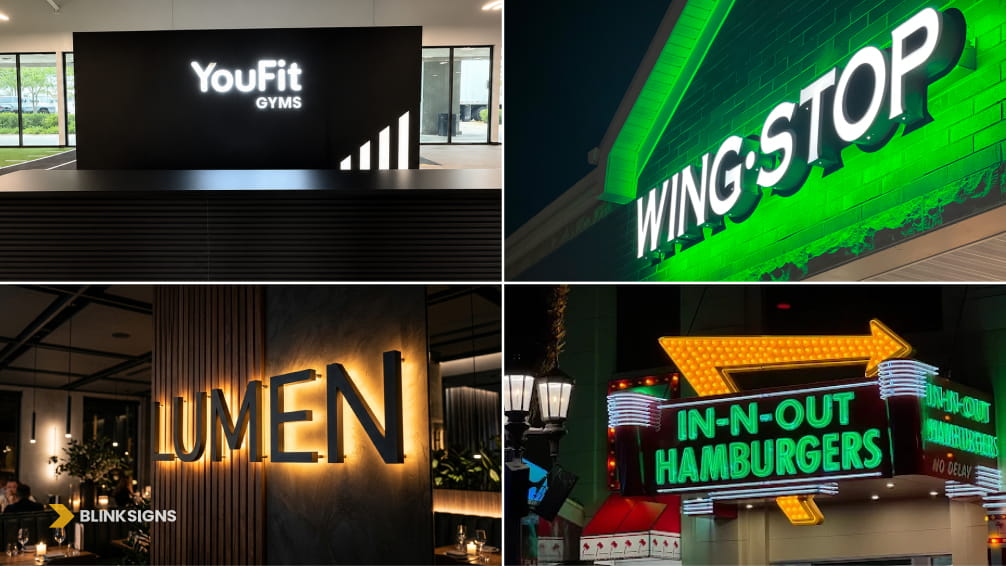
Popular illumination styles for business signage.
The lighting method can affect the look, scope of fabrication, electrical planning, installation process, and maintenance expectations.
Front-lit signs
A front-lit sign directs light through its front face. This is common with channel letters and cabinet signs. Front-lit channel letters often use translucent acrylic faces, LED modules, returns, trim caps, and either raceway or flush mounting.
Front-lit signs are popular because they provide clear, direct visibility. Storefronts, restaurants, retail locations, service businesses, and franchise brands often use them.
Cost can be affected by letter height, logo complexity, number of letters, lighting components, face material, mounting method, wall condition, electrical access, permit requirements, and installation access.
Halo-lit signs
A halo-lit sign, also called a reverse-lit or backlit letter sign, places lighting behind the letters so the glow reflects onto the wall or mounting surface. This can create a premium, softer visual effect.
Halo-lit signs are often used by offices, hospitality brands, medical groups, lifestyle businesses, showrooms, and premium retail locations.
Cost can be affected by letter depth, spacing from the wall, wall surface, mounting conditions, lighting effect, finish, logo complexity, electrical coordination, and installation access. The background surface matters because the glow depends on how light reflects off it.
Combination-lit signs
Combination-lit signs use more than one lighting effect, such as face illumination and halo illumination together. This can create a stronger brand presentation, but it also adds complexity to fabrication and coordination.
Cost can be affected by lighting design, wiring path, power supplies, letter depth, custom finishes, sign size, mounting method, and service access.
Cabinet and lightbox signs
A cabinet sign, often called a lightbox sign, uses an illuminated cabinet with a sign face. The face may be made of acrylic, polycarbonate, vinyl graphics, printed graphics, routed panels, or other materials, depending on the design and property requirements.
Cabinet signs are common for shopping center tenants, plazas, roadside businesses, medical offices, service businesses, and straightforward illuminated storefront signage.
Cost can be affected by cabinet size, face material, frame, lighting components, single-sided or double-sided design, wall or pole mounting, electrical access, landlord criteria, service access, and replacement face planning.
LED neon-style signs
LED neon-style signs use flexible LED products or similar illuminated materials to create a neon-like look. They are commonly used for interior branding, accent walls, hospitality spaces, retail displays, studios, and selected storefront applications where appropriate.
Cost can be affected by design complexity, length, mounting surface, suitability for indoor or outdoor use, power requirements, color, support structure, and service expectations.
LED neon-style signage should not be assumed suitable for every exterior condition. Buyers should confirm product suitability, mounting conditions, and service expectations before choosing it for outdoor use.
Traditional neon signs
Traditional neon signs use glass tubing and specialized components. They can provide a classic visual effect, but they require appropriate fabrication, handling, installation, power coordination, and service planning.
Traditional neon may be chosen for restaurants, bars, theaters, hospitality concepts, retro branding, and specialty interiors. Buyers should clarify maintenance expectations, replacement parts, local service availability, and safety requirements before choosing traditional neon over LED alternatives.
Electronic message centers
An electronic message center is a programmable illuminated sign that can display changeable messages. Schools, churches, campuses, municipalities, shopping centers, and public-facing organizations may use it.
EMCs have a different cost structure from fixed illuminated signs because they may involve display size, pixel pitch, brightness controls, software, content governance, message-change rules, permits, structure, electrical coordination, and service access.
For deeper planning, see the Electronic Message Center Cost Guide.
Sign size, materials, and fabrication complexity
Sign size affects material usage, fabrication time, lighting components, mounting requirements, installation access, and visibility planning. Larger signs may require more letters, larger faces, stronger cabinets, more LED modules, more power supplies, more structural support, more labor, and more service-access planning.
Size should not be selected only by budget. It should fit the viewing distance, building frontage, sign code, landlord criteria, traffic approach, pedestrian path, and brand requirements.
Materials also affect cost and long-term ownership. Common illuminated sign materials and components may include:
- Aluminum
- Acrylic
- Polycarbonate
- Stainless steel
- Routed panels
- Push-through acrylic
- Trim cap
- Returns
- Raceway
- Sign cabinets
- LED modules
- LED drivers
- Power supplies
- Transformers
- Mounting hardware
- Translucent vinyl
- Printed faces
- Protective coatings where appropriate
Fabrication complexity can increase when a sign includes custom logo shapes, layered construction, multiple colors, specialty finishes, halo illumination, combination lighting, routed faces, push-through acrylic, exposed neon-style effects, curved forms, or brand-specific design details.
A simple rectangular cabinet sign and a custom halo-lit letter set are not in the same scope. A standard storefront channel letter sign and an illuminated monument sign are not the same project. A single-location sign and a multi-location franchise rollout are not the same operating model.
The right illuminated sign should balance visibility, brand fit, property requirements, installation conditions, service access, and long-term maintenance.
Storefront illuminated signs vs monument, pylon, and EMC signs
Illuminated signage can support different visibility needs depending on where the sign is placed.
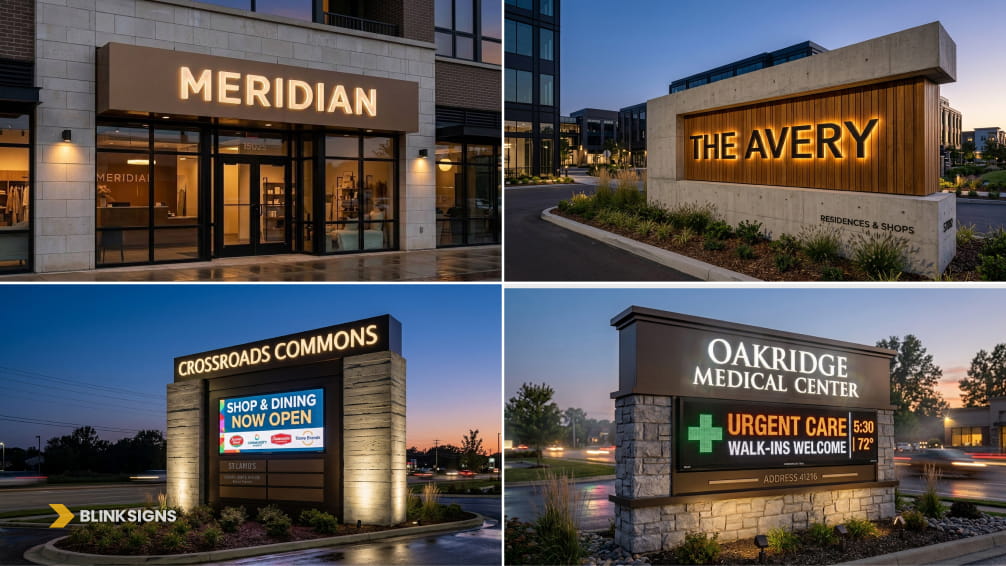
Storefront fascias compared with roadside monuments
Storefront illuminated signs
Storefront illuminated signs are usually mounted on a building facade, sign band, storefront wall, raceway, canopy area, or tenant panel. They may include front-lit channel letters, halo-lit letters, cabinet signs, lightbox signs, LED neon-style signs, or illuminated logo signs.
Cost can be affected by tenant criteria, wall condition, sign band size, electrical access, letter height, logo detail, mounting method, landlord approval, permit requirements, installation height, and access equipment.
A storefront sign should be planned with visibility from the sidewalk, parking lot, street, and entrance approach in mind. The goal is not only to light the sign but also to make the business easier to identify in the physical environment.
Illuminated monument signs
Illuminated monument signs are freestanding signs placed at ground level or near a property entrance. They may use internal lighting, external lighting, illuminated panels, push-through acrylic, channel letters, cabinet inserts, or EMC displays.
Cost can be affected by base structure, masonry, materials, sign face, lighting method, electrical access, landscaping, site placement, permit requirements, and service access.
Monument signs are common for office buildings, medical campuses, schools, churches, apartment communities, business parks, and institutions.
Illuminated pylon signs
Illuminated pylon signs are taller, freestanding signs often used for roadside visibility. They may include tenant panels, cabinet faces, LED lighting, channel elements, or programmable message displays.
Cost can be affected by height, structure, wind exposure, sign face size, double-sided design, tenant panels, electrical coordination, equipment access, installation conditions, permit requirements, and maintenance access.
Pylon signs are common for shopping centers, gas stations, roadside businesses, plazas, hotels, and multi-tenant sites.
Electronic message centers
Electronic message centers are programmable outdoor signs used for changeable messages. They may be part of a monument sign, pylon sign, pole-mounted sign, or public-facing institutional sign.
Cost can be affected by display size, pixel pitch, brightness, software, content controls, electrical coordination, potential permit requirements, message-change rules, service access, and long-term maintenance planning.
A fixed illuminated sign and an EMC should not be priced as the same product. One primarily identifies the business or property. The other adds changeable digital messaging and a different ownership model.
Installation, electrical coordination, and permit requirements
Installation, electrical coordination, and permit requirements can significantly affect illuminated sign cost because a lighted sign is not only a fabricated product. It is also a field-installed business visibility asset that must fit the building, property, power conditions, mounting surface, landlord criteria, and local approval environment.
An illuminated sign may be installed on a storefront wall, sign band, raceway, cabinet, monument base, pylon structure, canopy, fascia, freestanding sign structure, existing sign frame, or multi-tenant shopping center panel.
Each location can change the scope of the installation. A storefront channel letter sign may require different access, mounting, and electrical coordination than an illuminated monument sign. A lightbox sign on a tenant facade is not the same project as a tall pylon sign along a roadside. An LED neon-style interior sign is not the same as an exterior illuminated cabinet sign exposed to weather.
Buyers should clarify whether the quote includes site review, mounting method, installation labor, access equipment, removal of old signage, surface patching or repair, electrical coordination, permit support where relevant, landlord or tenant criteria review, final connection coordination, cleanup, disposal, and service access planning.
Electrical coordination should be handled carefully. Illuminated signs may include LED modules, power supplies, drivers, transformers, wiring pathways, disconnects, raceways, or other lighting-related components, depending on the sign type. This guide does not provide wiring instructions, electrical advice, or code interpretation. Qualified professionals should handle electrical work where required.
Permit requirements also vary by jurisdiction and property. A local authority, landlord, shopping center, campus, business park, or property owner may regulate sign size, placement, illumination, brightness, color, mounting method, materials, projection, sign area, hours of operation, or tenant consistency.
A reliable illuminated sign quote should separate what is confirmed, what is assumed, and what depends on site review or permit approval.
Illuminated sign cost for business use case
Illuminated sign costs change by business type because different properties have different visibility goals, operating hours, branding needs, landlord rules, installation conditions, and maintenance expectations.
The right illuminated sign for one business may not be the right sign for another. A restaurant may need strong evening visibility. A medical office may need a clean professional sign. A retail store may need storefront recognition from a parking lot. A franchise may need brand consistency across multiple properties. A shopping center tenant may need to follow strict landlord sign criteria.
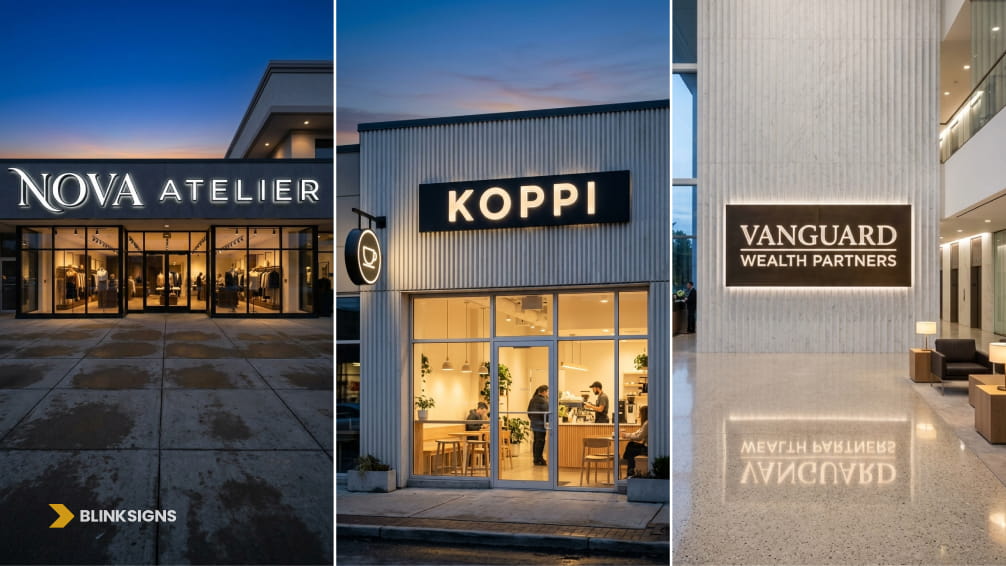
Lighted signage tailored for diverse businesses.
Retail stores and shopping center tenants
Retail stores often use illuminated channel letters, cabinet signs, lightbox signs, or illuminated logo signs to improve visibility from parking areas, sidewalks, and nearby traffic. Cost can be affected by tenant criteria, landlord approval, sign band size, logo complexity, letter height, mounting method, electrical access, installation height, and the removal of old signs.
Shopping center tenants should confirm whether the property requires a specific sign type, raceway color, letter size, lighting method, sign face material, installation method, or approval process.
Restaurants, cafes, and hospitality businesses
Restaurants, cafes, hotels, bars, and hospitality brands often need signs that remain visible in the evening. They may use front-lit channel letters, halo-lit letters, cabinet signs, LED neon-style signs, illuminated monument signs, or pylon signs, depending on the property.
Cost can be affected by brand detail, logo shape, lighting effect, storefront condition, indoor or outdoor use, operating hours, landlord rules, installation access, and maintenance expectations.
Restaurants should avoid choosing a sign only because it looks bright in isolation. The sign should fit the building, viewing distance, neighborhood, brand style, and local requirements.
Medical offices and professional services
Medical offices, dental practices, clinics, legal offices, financial offices, and professional service firms often need clean, readable, trustworthy illuminated signage. The sign may be mounted on a storefront, monument, building facade, or multi-tenant sign structure.
Cost can be affected by building rules, sign materials, lighting method, visibility needs, monument integration, landlord approval, permit requirements, and service access.
A medical office sign should prioritize legibility, brand consistency, and ease of identification over unnecessary visual complexity.
Franchises and multi-location brands
Franchises and multi-location brands often need consistency across different buildings, landlords, cities, and installation environments. A sign that works at one property may require adjustments at another due to facade size, local sign regulations, landlord criteria, electrical access, or installation conditions.
Cost can be affected by site surveys, brand standards, fabrication consistency, installation coordination, permit tracking, replacement planning, and long-term maintenance.
For multi-location projects, BlinkSigns can provide rollout visibility through SignTrax, where applicable, helping stakeholders track project progress across locations.
Office buildings, campuses, and business parks
Office buildings, campuses, and business parks may use illuminated monument signs, building signs, tenant directories, cabinet signs, or pylon signs. Cost can vary based on the structure, materials, lighting method, landscaping, electrical access, tenant panels, sign code review, and service access.
These projects should be planned as part of the full property visibility system, not just as one sign face.
Roadside businesses and service locations
Gas stations, automotive service centers, storage facilities, urgent care centers, restaurants, hotels, and roadside retailers may need illuminated signage that is visible to moving traffic. They may use pylon signs, illuminated cabinets, channel letters, monument signs, or EMCs, depending on the property.
Cost can be affected by height, double-sided visibility, structure, wind exposure, electrical coordination, access equipment, permit requirements, service planning, and maintenance access.
A larger sign is not automatically better. The sign should match the road approach, viewing distance, traffic speed, local rules, brand style, and property layout.
Hidden illuminated sign costs buyers should check
Illuminated sign quotes can be difficult to compare because one quote may include only the sign product. In contrast, another may include fabrication, lighting components, installation, electrical coordination, permit support, removal, service access, and maintenance planning.
Before approving a budget, buyers should confirm what is included, what is excluded, and what could change after site review.
| Buyer question | Why it matters |
| Is this a sign product, an installed sign, or a full project scope? | Product pricing may exclude installation, electrical coordination, permits, removal, and service access |
| Which lighting method is included? | Front-lit, halo-lit, backlit, neon-style, cabinet, and programmable LED signs have different scopes |
| Is the sign mounted on a wall, a raceway, a monument, or a pylon? | Mounting conditions can change fabrication, access, installation, and service needs |
| Is electrical coordination included? | Illuminated signs may require a qualified review and field coordination |
| Is permit support included where relevant? | Sign size, illumination, placement, and zoning rules may affect approval |
| Does the landlord or property have sign criteria? | Tenant panels, shopping centers, campuses, and buildings may restrict style, size, color, materials, or lighting |
| Is access equipment required? | Height, road frontage, roofline access, and site restrictions can affect installation |
| Is service access planned? | LED drivers, power supplies, faces, transformers, and lighting components may need future service |
| Is the sign suitable for outdoor exposure? | Materials, faces, seals, lighting, and cabinet construction vary by environment |
| Does the quote include the removal of the old sign? | Removal, patching, disposal, and surface repair can change the scope |
| Is maintenance included? | Cleaning, lighting repairs, driver replacement, face replacement, and inspections may be separate |
| Is this part of a multi-location rollout? | Standards, surveys, approvals, fabrication consistency, installation tracking, and SignTrax visibility may be needed |
The safest quote comparison question is:
Does this quote cover only the illuminated sign product, or does it cover the full lighted sign project?
Need help clarifying the scope of your illuminated sign? BlinkSigns can help review the sign type, lighting method, property conditions, installation needs, electrical coordination, permit requirements, landlord criteria, service access, and multi-location requirements before you compare quotes.
Illuminated sign repair, retrofit, maintenance, and replacement planning
Illuminated signs need long-term ownership planning because lighting components, faces, cabinets, wiring paths, seals, drivers, power supplies, and mounting conditions may require service over time.
Maintenance needs can vary by sign type.
A cabinet sign may need face replacement, lighting service, cleaning, seal review, or cabinet access. Channel letters may need LED module service, driver replacement, face repair, trim cap review, or raceway access. Halo-lit letters may require service access behind the letters and a review of how the wall surface affects the lighting. Monument and pylon signs may require access equipment, electrical coordination, panel replacement, and service planning. LED neon-style signs may require a product-specific service review, depending on where and how they are installed.
Buyers should clarify who handles lighting repairs, how LED modules or power supplies are accessed, whether sign faces can be replaced if branding changes, whether the cabinet is easy to service, whether access equipment is needed, whether replacement parts are available, what warranty terms apply, and who coordinates service for multi-location signs.
A retrofit may be considered when an existing sign structure remains usable, and the new lighting, face, or sign components fit within the approved scope. A full replacement may be more appropriate when the old sign is damaged, poorly located, difficult to service, incompatible with current branding, or no longer suitable for the property.
This guide does not provide repair, retrofit, wiring, installation, or structural instructions. Existing illuminated signs should be reviewed by qualified professionals where required.
When an illuminated sign may not be the right fit
An illuminated sign may not be the best solution for every business, property, or communication goal.
An illuminated sign may not be the right fit when local rules restrict illuminated signage, the property prohibits certain lighting methods, the business does not operate during evening or low-light hours, the sign location has limited visibility, the building surface is not suitable for the preferred sign type, electrical access is not practical within the approved scope, a static non-illuminated sign would be easier to approve, maintenance access would be difficult, or a different sign type would better fit the goal.
The right sign is the one that fits the property, brand, audience, approval path, installation conditions, and ownership model.
Multi-location illuminated sign planning.
Multi-location illuminated signage should be treated as a managed signage program, not a series of disconnected sign purchases.
This applies to franchise groups, retail chains, restaurant groups, healthcare networks, banking and financial brands, fitness chains, hospitality groups, regional service businesses, property management groups, and campus systems.
A multi-location illuminated sign program may need brand standards, approved sign types, lighting method rules, material specifications, raceway or flush-mount preferences, landlord criteria tracking, permit tracking, site surveys, electrical coordination, fabrication consistency, installation coordination, old sign removal planning, maintenance responsibility, replacement planning, service documentation, location-level exception handling, and project visibility through SignTrax, where applicable.
The goal is consistent brand visibility with site-specific flexibility. A national restaurant brand may need one sign standard adapted to different storefronts. A retail chain may need tenant criteria handled across shopping centers. A healthcare network may need illuminated monument signs that match brand standards but fit different campuses.
Scaling a weak sign standard can multiply problems. Before rollout, buyers should define what is standardized, what can vary, who approves exceptions, and how installation and maintenance will be tracked.
What to prepare before requesting an illuminated sign estimate
A clearer estimate for illuminated signs starts with clearer project information.
Prepare the following, where available:
- Property address
- Business type
- Brand guidelines or logo files
- Photos of the current storefront or sign location
- Photos of the existing sign, if any
- Desired sign type, if known
- Preferred lighting method, if known
- Approximate sign size or available sign band dimensions
- Mounting location
- Wall, raceway, cabinet, monument, or pylon details
- Indoor or outdoor placement
- Customer-facing viewing path
- Daytime and nighttime visibility needs
- Landlord or tenant sign criteria
- Permit status, if already started
- Electrical access notes, if known
- Existing sign removal needs
- Installation access restrictions
- Working-hour limitations
- Service access concerns
- Number of locations, if multi-site
- Target timeline
The most useful photos show the full storefront or property frontage, the proposed sign location, the existing sign, the surrounding walls or structure, the road or sidewalk approach, obstructions, the sign band area, and the access conditions.
For multi-location programs, each site should be documented separately. One brand standard can guide the rollout, but each property may require its own review for landlord criteria, permit requirements, installation access, electrical coordination, and service planning.
Download the Illuminated Sign Quote Prep Checklist
Use the Illuminated Sign Quote Prep Checklist before requesting an estimate. It can help organize property photos, sign type preferences, lighting methods, mounting locations, electrical notes, permit status, landlord criteria, existing sign details, service access concerns, and multi-location requirements.
The checklist is designed to help buyers prepare for a clearer conversation. It does not replace site-specific review, installation review, electrical review, structural review, permit review, landlord approval, sign-code review, maintenance planning, or a confirmed project quote.
Organize your site photos, dimensions, and electrical access notes before requesting an estimate.
Download the Illuminated Sign Quote Prep Checklist now.↘
How BlinkSigns helps plan illuminated signs
BlinkSigns helps commercial buyers turn a broad request for a lighted business sign into a clearer project scope.
That includes clarifying whether the project is a front-lit channel letter sign, halo-lit letter sign, combination-lit sign, cabinet or lightbox sign, LED neon-style sign, traditional neon sign, illuminated storefront sign, illuminated monument sign, illuminated pylon sign, electronic message center, repair, retrofit, replacement, or multi-location signage rollout.
BlinkSigns supports illuminated signage as part of a complete visibility system, helping buyers coordinate design, fabrication, permitting support (where relevant), installation coordination, repair planning, maintenance needs, and project visibility through SignTrax, where applicable.
BlinkSigns can also connect illuminated signage with the broader signage environment, including storefront signs, monument signs, pylon signs, cabinet signs, channel letters, digital signage, electronic message centers, wayfinding signs, window graphics, door decals, interior branding, and sign repair programs.
This matters because illuminated signs rarely exist alone. A lighted storefront sign may need to match window graphics, door decals, directional signs, monument signs, interior branding, and customer wayfinding.
Frequently asked questions
What is an illuminated sign?
An illuminated sign is a business sign that uses built-in or attached lighting to improve visibility. It may use internal lighting, face lighting, halo lighting, backlighting, cabinet lighting, LED modules, neon-style lighting, or programmable digital display technology.
How much does an illuminated sign cost?
The cost of an illuminated sign depends on the sign type, lighting method, size, materials, fabrication complexity, mounting location, electrical coordination, installation access, permit requirements, service access, and maintenance needs. Public market examples can be useful for early planning, but they should not be treated as BlinkSigns pricing or a guaranteed project quote.
Why do illuminated sign prices vary so much?
Illuminated sign prices vary because one quote may describe a sign product without a field scope. At the same time, another may include fabrication, lighting components, installation, electrical coordination, permits, landlord review, removal, service access, and maintenance planning. Buyers should compare quotes by the scope included, not by the headline price alone.
What is the difference between an illuminated sign and an LED sign?
An illuminated sign is any sign that uses lighting to improve visibility. An LED sign uses LED lighting or LED display technology. Many modern illuminated signs use LEDs, but illuminated signage can also include cabinet signs, channel letters, halo-lit letters, neon signs, lightboxes, monument signs, pylon signs, and electronic message centers.
What is the difference between an illuminated sign and a backlit sign?
An illuminated sign is the broader category. A backlit sign is a type of illuminated sign in which light is placed behind or within the sign to create a glowing effect. Halo-lit channel letters are a common backlit style.
Are channel letters illuminated signs?
Channel letters can be illuminated signs when they include lighting. They may be front-lit, halo-lit, or combination-lit depending on the desired appearance, mounting surface, brand style, and project scope.
Are cabinet signs the same as lightbox signs?
Cabinet signs and lightbox signs are closely related terms. Both usually refer to an illuminated sign cabinet with a translucent face and internal lighting. The exact design, face material, frame, lighting system, and mounting method can vary by project.
Is a neon sign considered illuminated signage?
Yes. Traditional neon signs and LED neon-style signs are both types of illuminated signage. They have different considerations for fabrication, installation, maintenance, and service, so buyers should clarify which type is being quoted.
Does an illuminated sign need a permit?
An illuminated sign may require a permit review depending on local rules, sign size, lighting method, placement, zoning, landlord criteria, and the scope of installation. Requirements vary by jurisdiction and property. Buyers should confirm requirements before fabrication or installation.
Does an illuminated sign require electrical work?
Many illuminated signs require electrical coordination because they use lighting components such as LED modules, drivers, power supplies, transformers, or internal lighting systems. Qualified professionals should handle electrical work where required.
What hidden costs should buyers check?
Buyers should check whether the quote includes design, fabrication, lighting components, installation, electrical coordination, permit support, landlord review, access equipment, old sign removal, patching, disposal, service access, repair planning, and maintenance expectations.
What affects the cost of an illuminated storefront sign?
The cost of an illuminated storefront sign can be affected by sign type, letter height, cabinet size, logo complexity, lighting method, wall condition, sign band size, raceway or flush mounting, landlord criteria, permit requirements, electrical access, installation height, and removal of old sign.
What affects the cost of an illuminated monument sign?
The base structure, sign materials, lighting method, masonry, sign face, electrical access, landscaping, site placement, permit requirements, tenant panels, and service access influence the cost of an illuminated monument sign.
How long does an illuminated sign last?
Illuminated sign lifespan depends on sign type, lighting components, materials, operating hours, weather exposure, installation conditions, maintenance, and service access. Buyers should ask about warranty terms, replacement parts, maintenance expectations, and access to repairs rather than relying on a single universal lifespan claim.
When is an illuminated sign not the right fit?
An illuminated sign may not be the right fit when local rules restrict illumination, the property prohibits certain lighting methods, the business does not need low-light visibility, electrical access is impractical, maintenance access is difficult, or a non-illuminated sign better fits the site and budget.
Sources, limitations, and review note
This guide is based on examples from the public illuminated sign market, common commercial signage planning factors, and publicly available guidance on electric signs, illuminated signage, sign installation, and sign code considerations. Public examples are used only to explain why illuminated sign costs vary by scope. They are not quoted as BlinkSigns pricing.
Important limitations:
- Product-only prices, fabricated sign examples, installed sign examples, and complete-project budgets should not be averaged into one universal illuminated sign cost.
- Local rules for sign size, lighting, brightness, color, placement, projection, and permit review vary by jurisdiction and property.
- Electrical requirements vary by sign type, building condition, local rules, and field conditions.
- Hardware lifespan, lighting performance, maintenance needs, and repair expectations vary by sign type, materials, operating conditions, and support model.
- This article should be reviewed when public pricing patterns change, when BlinkSigns approves a new pricing policy, or when local code guidance materially changes.
**Planning and safety note**

This guide is for buyer education and preliminary budgeting. It is not a project quote, installation instruction, electrical advice, structural guidance, engineering advice, code interpretation, zoning advice, brightness compliance guidance, landlord approval guidance, or legal advice.

Final requirements depend on the selected products, approved specifications, site conditions, property criteria, vendor documentation, local requirements, installation conditions, electrical conditions, sign type, lighting method, materials, mounting location, and, where applicable, permit review.

Qualified professionals should handle electrical, structural, mounting, installation, and field work when required. Do not attempt unsafe wiring, sign installation, cabinet modification, structural work, lighting configuration, or service work beyond your organization’s approved process.
Plan the full illuminated sign system before comparing prices
The cost of an illuminated sign depends on the complete lighted sign system. The sign face, letters, cabinet, lighting components, mounting method, electrical coordination, installation conditions, permit requirements, service access, and maintenance expectations all affect the final scope.
A reliable illuminated sign plan should begin with the sign type. A channel letter sign, a cabinet sign, a halo-lit storefront sign, an illuminated monument sign, a pylon sign, a neon-style sign, and an electronic message center are different projects.
Once the sign type is clear, buyers can compare quotes based on what is actually included.
BlinkSigns helps commercial buyers clarify the scope of illuminated signage before comparing prices, so the final plan reflects the business, property, brand, visibility needs, installation conditions, approval path, service expectations, and the broader signage system.